
 R.C
R.C BTS, “Arirang,” and the Return to Their Roots: A Journey Through History in the Heart of Seoul
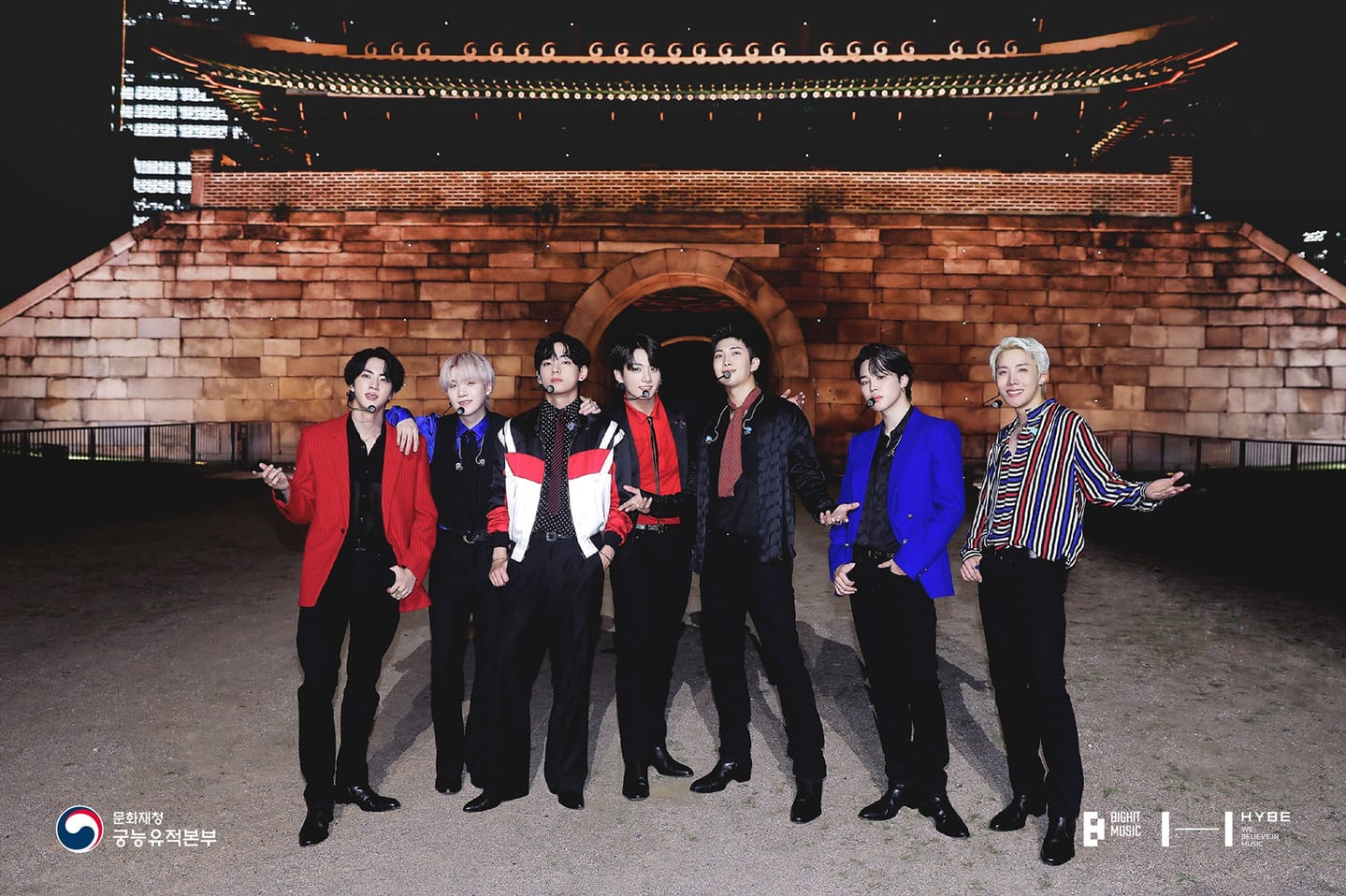
On March 21, 2026, the entire world will have its eyes set on Seoul. After a nearly four-year hiatus as a full group, BTS returns to the stage. But this highly anticipated comeback is not a step toward the future of K-pop; surprisingly, it is a deep dive into the past.
With their new album titled “Arirang” (in honor of the centuries-old folk song considered Korea’s unofficial anthem), BTS seeks to reconnect with their roots, their starting point, and their internal history. To convey this powerful message, a modern stadium or cutting-edge special effects were not enough. HYBE, their agency, has orchestrated a monumental hour-long spectacle that will transform Seoul’s most sacred historical landmarks into the stage for their return, literally bridging the Joseon Dynasty with contemporary Korea, and broadcasting it live to 190 countries via Netflix.
Whether you are part of the 200,000 fans expected on the streets that day, or if you will be watching from your screen, here we explain the deep meaning behind every step the group will take on this historic night.
Want to glow like your bias? ✨ Find the exact K-Beauty products used by your favorite Idols here! Don’t miss the insane daily offers and enjoy FREE SHIPPING on orders over $60. Shop now at Olive Young Global! 🛍️The Starting Point for the Arirang Show: Geunjeongjeon, the Throne of the Universe
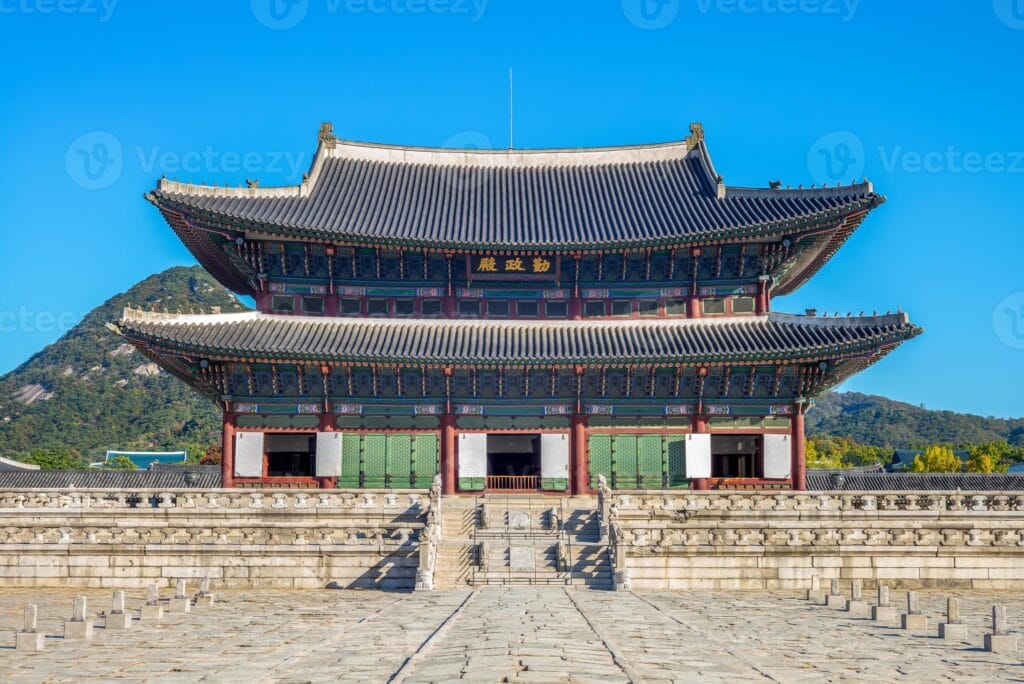
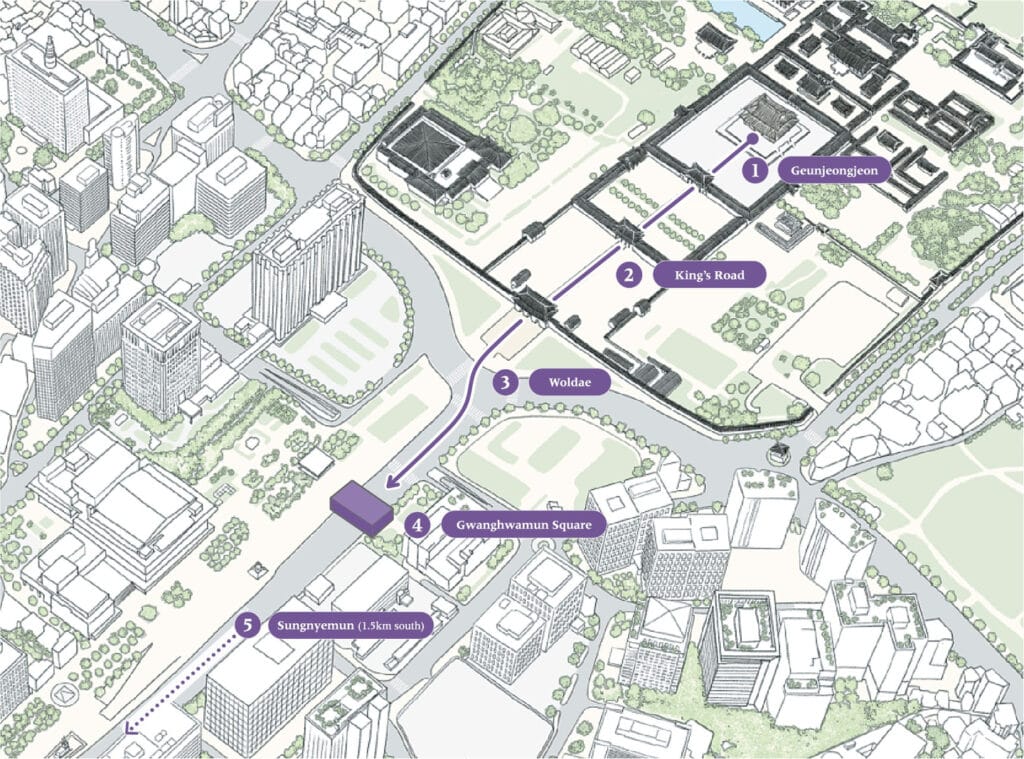
BTS’s journey will not begin on just any stage, but at Geunjeongjeon, the main hall of Gyeongbok Palace. Built with the founding of the Joseon Dynasty (1392-1910), this was the beopgung (main palace) where the king resided, governed, and received foreign envoys.
Historically, access to this courtyard was strictly reserved for the highest-ranking officials. The building is flanked by statues of the four guardian deities (which protect the cosmic order from evil forces) and the 12 zodiac animals, reinforcing the idea that the king, seated at the center, was the axis of the universe.
You can also read BTS World Tour 2026, the World Turns Purple: A Historic 79-Date Tour That Will Break All Records
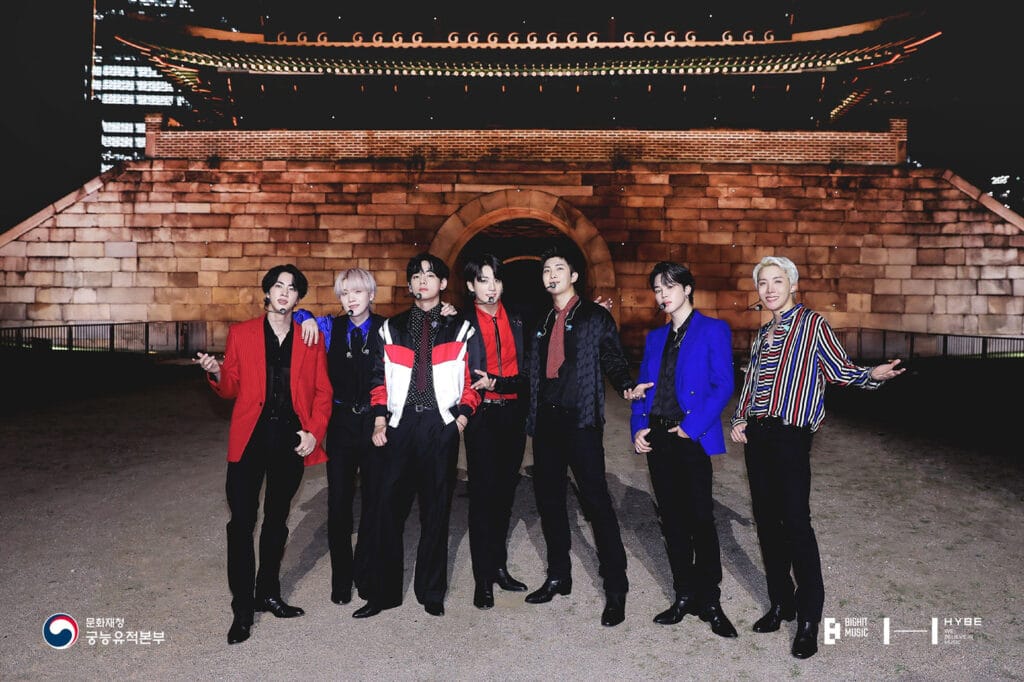
It is not the first time BTS has stepped on this sacred ground; in 2020, they performed “IDOL” and “Dynamite” here. However, this time the symbolism is different. Starting their comeback at the epicenter of ancient Korean power is a declaration of intent: they are claiming their place not only as the kings of pop but as the definitive ambassadors of Korean culture.
The King’s Road (Eodo): Forbidden Steps
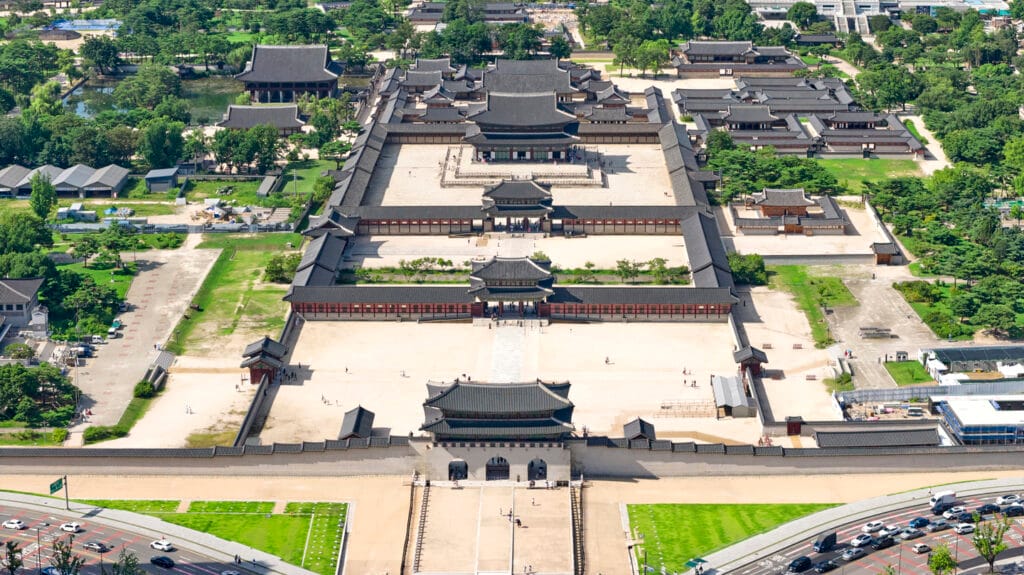
From Geunjeongjeon, the seven members of BTS will embark on a march that, centuries ago, would have been unthinkable for anyone not wearing a crown. They will walk along the Eodo, the elevated central passage of the courtyard, popularly known as the “King’s Road.” Even the highest-ranking government officials were forbidden from stepping on this stone; they had to walk through the side entrances.
Along this sacred path, BTS will pass through three monumental gates: Geunjeongmun, Heungnyemun, and finally Gwanghwamun (the palace’s main and largest gate). Each step through these arches (whose central arch remains restricted to the general public today) is a symbolic rupture of the ancient authoritarian hierarchy, connecting the isolated heart of the palace with the outside world.
Woldae: The Ancient Bridge to the People
Upon exiting through the great gate of Gwanghwamun during the Netflix comeback, Arirang, the group will reach the Woldae, an immense stone platform that was recently restored and opened to the public in 2023.
During the Joseon era, the Woldae was the only real point of contact between royalty and common citizens. King Gojong used to use this space to communicate with his people or for the crown prince to distribute rice in times of need. It was destroyed during the Japanese colonial occupation to build tram tracks, and its recent restoration (which included the donation of two mythical seosu statues by the late Samsung chairman, Lee Kun Hee) returned the gate to its original glory.
The fact that BTS will stop at this specific platform before crossing over to their main stage is a powerful nod to communication and unity: the ancient bridge between the monarch and the people is now the bridge between the artists and their ARMY, who will be supporting them from all over the world.
Gwanghwamun Square: The Pulse of Democracy
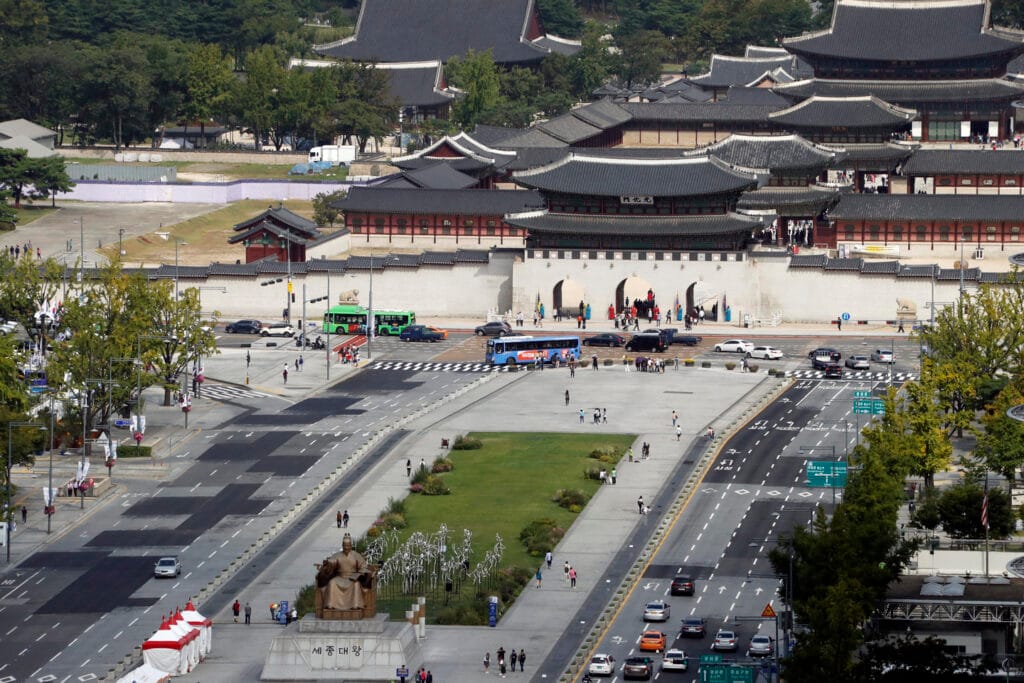
The final destination of BTS’s procession in their comeback with Arirang, and the place where the main stage will be set up (facing south), is the iconic Gwanghwamun Square.
If Gyeongbok Palace represents ancient history, this square is the beating heart of modern Korea. Since its original creation as “Yukjo Street,” it has survived colonial demolitions and political reconstructions. Today, adorned with the statues of Admiral Yi Sun-sin and King Sejong the Great, it is the epicenter of civic life.
For Koreans, it is not just a wide street; it is the place where they celebrated the 2002 World Cup and, more crucially, where millions gathered with candles to demand democracy and accountability from their leaders. It is the ultimate symbol of the power of the people. By choosing this square as their final stage, BTS anchors their return not in corporate glitz, but in the soil where the identity of the modern nation was forged.
Arirang, a Spectacle of Light and National Pride
While the seven members perform in the square, the visual spectacle will embrace the entire city. According to documents submitted to heritage authorities, multimedia facades will be projected onto the walls of Gyeongbok Palace and also onto Sungnyemun (Namdaemun), Korea’s National Treasure No. 1, located about 10 minutes south. The latter, the oldest surviving wooden structure in Seoul (built in 1398 and restored after a tragic fire in 2008), will complete this embrace of light over the capital’s history.
As Professor Sim Hee-chul of the Dong-ah Institute of Media and Art rightly pointed out, this event transcends a simple musical comeback; it is “a cultural olympics that will elevate Korea’s national brand.” By choosing the folklore of “Arirang” and the weight of the stones of Gwanghwamun, BTS has made it clear that to look toward the future of their career, they first needed to honor the ground that birthed them.
🧐 FAQs: Everything You Need to Know About BTS’s Comeback and “Arirang”
1. When is the “Arirang” album officially released?
Set your alarms and get your cards ready, ARMY. Although the grand comeback concert in Gwanghwamun is on March 21, the studio album “Arirang” will see the light of day one day prior. Its official global release is scheduled for March 20, 2026.
2. Will the Gwanghwamun concert be broadcast on Weverse as usual?
Attention here because there is a historic change! Unlike other major BTS concerts we have seen through Weverse, the BTS THE COMEBACK LIVE | ARIRANG show from Gyeongbok Palace will be broadcast live, globally, and exclusively on Netflix. In fact, Weverse has already published an official notice redirecting fans to Netflix to watch the show. This is the first time the red “N” platform is broadcasting a live event from South Korea to the whole world.
3. So, what exactly is going to be shown in movie theaters?
It’s normal to get confused with so much information, but let us clear it up for you. The show you will see on Netflix on March 21 is a special one-hour comeback event. However, the big-screen experience is also confirmed: the first two concerts of the world tour (which will kick off shortly after) will be the ones screened in movie theaters worldwide, just as it happened in the past with Permission to Dance on Stage.
4. Wait… Will there be a world tour after the Seoul concert?
Yes, and it’s massive! The return doesn’t just stop at Gwanghwamun. Following the album release and the Netflix special, the group will embark on the Arirang World Tour. The tour will begin in April 2026 in Goyang and will extend into 2027. Best of all, it marks the grand return of BTS to Latin America after almost a decade, with confirmed stadium dates in Mexico, Colombia, Peru, Chile, Argentina, and Brazil between May and October 2026.
5. Is it true that they will release a documentary about how they reunited?
Absolutely true. Netflix will not only broadcast the concert; on March 27, 2026 (just days after the live show), it will premiere the feature-length documentary “BTS: The Return”. It is directed by acclaimed filmmaker Bao Nguyen (director of The Greatest Night in Pop) and promises to show the most intimate and vulnerable side of RM, Jin, SUGA, j-hope, Jimin, V, and Jung Kook as they reunited in Los Angeles after their military service to create this new album.
6. How much were the tickets for the Gwanghwamun concert?
The March 21 concert is completely free. However, securing a spot was practically an extreme sport. Tickets were distributed through a lottery system (NOL Ticket) and sold out in a matter of minutes. The level of demand was so overwhelming that the system temporarily crashed. Although only a lucky few will be in the seating section, Seoul authorities expect more than 260,000 fans to descend upon the surroundings of the square just to listen from the outside.
7. What exact time will I be able to watch the live show on Netflix from Latin America and Spain?
The global broadcast will start at 8:00 p.m. (Korean Standard Time – KST) on Saturday, March 21. So you don’t miss it, here are some conversions:
- Mexico (CDMX) / Central America: 5:00 a.m.
- Colombia / Peru / Ecuador: 6:00 a.m.
- Venezuela / Bolivia: 7:00 a.m.
- Argentina / Chile / Brazil / Uruguay: 8:00 a.m.
- Spain (Peninsula): 12:00 p.m. (noon)

Mark Lee Leaves NCT and SM Entertainment After 10 Years

The Comeback of the Century! Everything About BTS’s “Arirang”, the March 21 Concert, and Their Global Impact

Why Did BTS Name Their New Album Arirang? The Secret Behind the Meaning of Its 14 Songs
BTS and The Deep Historical Meaning Behind Their Mega Concert in Gwanghwamun
“The King’s Warden”: The Box Office Smash Hit That Sparked an Unusual Digital Revenge in Korea




¡Qué emocionante idea! Siempre me ha fascinado la historia de Arirang y cómo BTS la está llevando a un nuevo nivel.
Es genial, realmente son embajadores de la cultura coreana!
[…] YOU CAN ALSO READ BTS and The Deep Historical Meaning Behind Their Mega Concert in Gwanghwamun […]