
 R.C
R.C “I told you I’d be back.” With that statement of principle, G-Dragon stepped onto the stage at the Gocheok Sky Dome this Sunday, December 14, bringing an end to an eight-month global tour. It wasn’t just any closing; it was the culmination of a year defined by his reemergence, a true roller coaster marked by both new historical milestones and public stumbles that the artist was not afraid to confront.
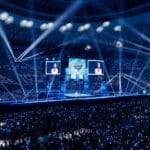
In front of 54,000 fans who filled the stadium during the three-day finale, the BIGBANG leader blurred the boundaries between philosopher, idol, and artist in a four-hour spectacle that felt like an intimate reunion between old friends.
Here we tell you every detail of the night, from the technical issues overcome to the news that will define the future of K-Pop in 2026.
The Philosophy Behind “Übermensch”: The Inner Superhuman
The concept anchoring the entire tour and his latest album is directly inspired by the philosophy of Friedrich Nietzsche. “Übermensch” (which translates as an individual “beyond man” or Superhuman) represents an ideal for GD: someone who redefines themselves rather than adhering to conventional moral codes.
Faithful to this structure, the concert unfolded in three thematic chapters based on the transformations of the spirit described by Nietzsche:
- “Camel”: The stage of bearing the burden.
- “Leo” (The Lion): The struggle for freedom and self-affirmation.
- “A Boy”: Rebirth and pure creation.
Far from leaving it as an abstract idea, G-Dragon explained the personal meaning in a prerecorded monologue toward the end of the night:
“Übermensch is not something grand or difficult; it’s something we all have within ourselves. Whether that be your mind, or your love, it is your beginning that becomes your inner pillar,” he reflected, making it clear that it is a state he aspires to, rather than a title he possesses.
Weathering the Storms: Climate, Delays, and the MAMA Controversy
The year 2025 brought major achievements, such as receiving the Order of Cultural Merit (becoming the first idol to achieve this) and performing before APEC leaders. However, G-Dragon also faced critical moments that he mentioned during the show.
The start of his tour in March was marked by chaos: the first concert was delayed for more than an hour due to severe weather conditions (sleet and wind), which affected stage safety. Recalling that stress, G-Dragon joked about it while looking up at the roof of the Gocheok Dome:
“Starting the world tour amidst natural disasters weighed heavily on my heart… That’s why I added the roof this time,” he said with a laugh.
More serious was the recent controversy following the 2025 MAMA Awards in Hong Kong last month. There, his performance received harsh criticism on social media for alleged excessive use of lip-sync and prerecorded tracks, with comments about “unstable” vocals. Conscious of this, a visible effort was made in this final show to demonstrate his live capability, delivering high-energy and clear raps, although some attendees noted there were still moments of pitch adjustment or reliance on backing tracks during choruses.
“I’ll make tonight the one and only special show to make it worth the massive love we’ve received,” he promised, aiming to make up for any past doubts.
A Visual and Sonic Spectacle: Guests and Setlist
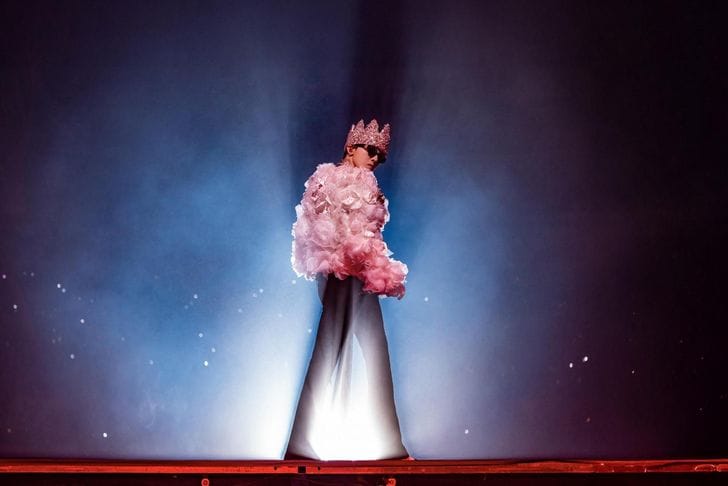
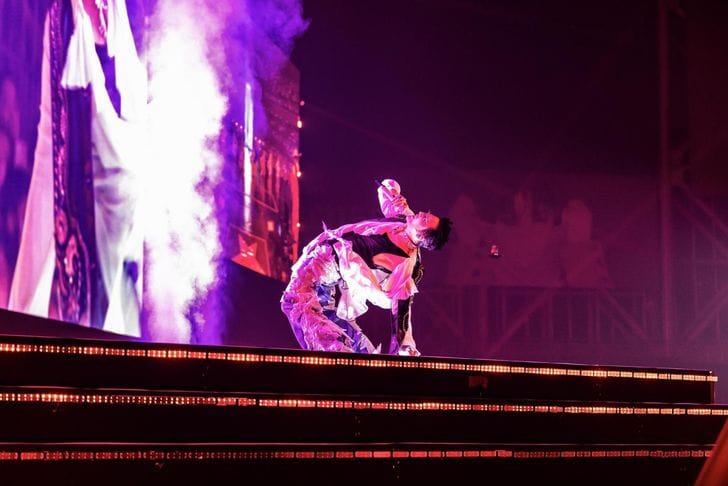
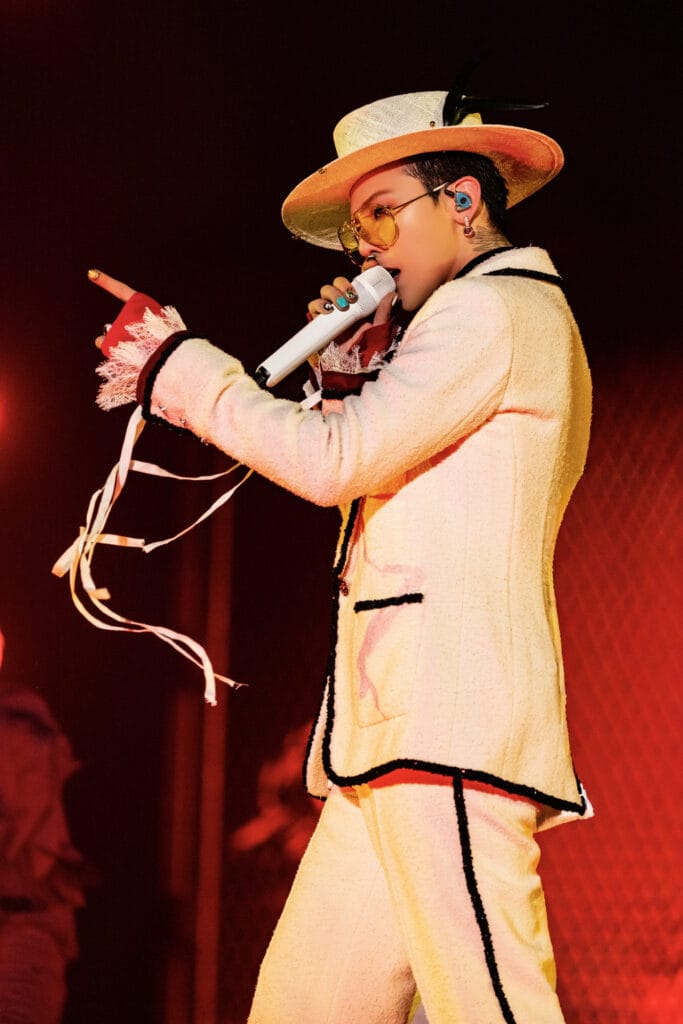
True to his identity as a fashion icon, G-Dragon dazzled with striking outfit changes: from a puffy white top that resembled a giant flower, to a long, glittering silver coat, and a black suit with a white daisy in the pocket (symbol of his brand Peaceminusone).
The setlist was a journey through his history, combining drone technology and LED walls with nostalgia:
- The Opening: He opened with “Power” and “Home Sweet Home.”
- The Classics: “Heartbreaker” (reimagined with beatbox group Beatpella House), “Crayon,” “One of a Kind,” and “Crooked.”
- The Surprises: He revived tracks rarely performed, such as “Butterfly” and “Today.” Additionally, he invited Bada Lee (winner of Street Woman Fighter 2) for a viral dance break featuring the “Smoke” choreography during the track “Too Good.”
The Climax: BIGBANG Reunion and Plans for 2026
Euphoria exploded when Taeyang and Daesung joined him on stage. They didn’t just sing; they joked and teased each other like brothers. Together they performed “We Like 2 Party” and, to the disbelief of veteran fans, “A Fool of Tears,” a ballad from their debut in 2006 that made one fan scream: “Seriously? They’re going to sing that?”
It was in this context of reunion where G-Dragon dropped the most awaited news regarding the group’s 20th Anniversary in 2026:
“It’s our coming-of-age year,” he declared.
And speaking about the return at the Coachella festival next April, he was direct but playful:
“BIGBANG will begin warming up in April. Well, no pressure… but if you happen to be nearby by any chance, why not come?”
G-Dragon closed the night by asking the crowd: “Should I do another show?” only to answer himself: “Well, don’t you think it’d be better to leave things a little wanting for the next bigger payoff?” The message is clear: new encounters are coming, and this time, he won’t be alone.
YOU CAN ALSO READ Made in Korea with Hyun Bin and Jung Woo-sung: The Most Expensive K-Drama in History?
FAQs: Extra Facts for G-Dragon Expert VIPs
1. What is the “Daisy Bong” mentioned in G-Dragon reports?
It is the name of G-Dragon’s new official lightstick as a solo artist. During the concert, a mixed “ocean” of lights was seen: many fans held the Daisy Bong (shaped like a flower), while others held the classic VIP Bong (BIGBANG’s yellow crown), symbolizing the union between his solo career and the group.
2. Who are “Beatpella House” who performed with G-Dragon?
They are a famous Korean beatbox and a cappella group. G-Dragon invited them to reinterpret his hits “Shake The World” and “R.O.D.” (from the 2013 album Coup d’etat) using only vocal sounds, offering a fresh, acoustic version of songs that are usually very electronic.
3. Why is it so significant that they sang “A Fool of Tears”?
The song “A Fool of Tears” (Nunmulppunin Babo) belongs to BIGBANG’s first single album released in 2006. It is extremely rare for them to perform it live decades later, as it represents their classic R&B roots before their electronic explosion. Playing it in 2025 symbolizes coming full circle before their 20th anniversary.
4. Which cities did G-Dragon’s “Übermensch” tour visit?
The tour covered 17 cities across three continents: Asia, North America, and Europe. It was his first world tour in eight years (since Act III: M.O.T.T.E in 2017) and 11 years after his previous full-length album.
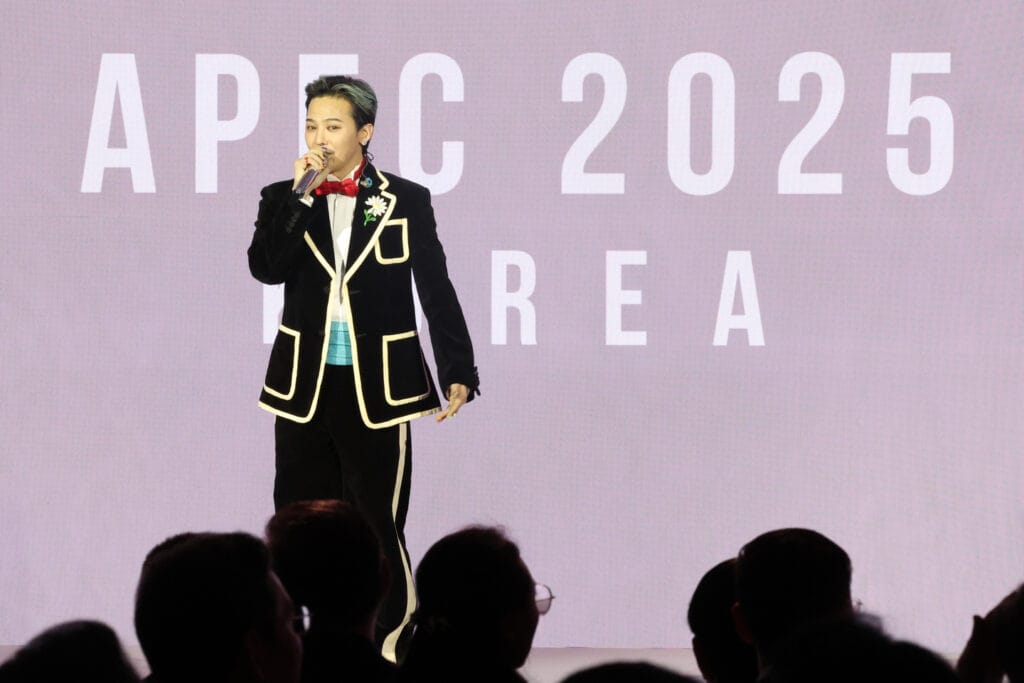
5. What does G-Dragon’s “Daisy” outfit mean?
The black suit with the white daisy in the pocket is a direct reference to his fashion and art brand, Peaceminusone. The daisy missing one petal is the brand’s logo, representing Peace minus One, a metaphor for imperfection in an ideal world.
6. What ticket record did this G-Dragon Seoul finale break?
According to reports, tickets for the three final nights at the Gocheok Sky Dome sold out completely in just 8 minutes, proving that despite the hiatuses and controversies, his drawing power remains intact.
BTS and The Deep Historical Meaning Behind Their Mega Concert in Gwanghwamun
“The King’s Warden”: The Box Office Smash Hit That Sparked an Unusual Digital Revenge in Korea

“Boyfriend on Demand”: The Netflix K-drama where BLACKPINK’s Jisoo seeks the perfect romance (and her acting redemption)
Seollal: A Deep Journey into the Meaning of Lunar New Year in Korea

“The Art of Sarah,” Your Next 2026 Netflix Obsession
Attention,…

Wow, this is such a powerful piece about G-Dragon’s journey! It’s amazing to see him looking back and setting such a grand vision for BIGBANG.