
 R.C
R.C The moment every ARMY had been waiting for has finally arrived. This Wednesday, the official tracklist for BTS’s upcoming album, Arirang, was revealed, and with it, an emotional journey of 14 tracks reflecting on the ups and downs the seven members have experienced throughout their lives and career.
But the tracklist reveal left a profound question hanging in the air: Why did BTS decide to name their fifth studio album “Arirang”? How does such an ancient word encapsulate the dizzying journey of the biggest band in the world?
To understand this, we have to take a trip into the past. Naming their record Arirang goes far beyond choosing a familiar word; it is a deliberate effort by BTS to reconnect with their roots and reassess their own identity to the world.
What Exactly is “Arirang”?
Often considered Korea’s unofficial national anthem, Arirang is not a single song, but a collection of ancestral folk chants that share the refrain “Ari” or “Arirang.” It is a melody embedded in the Korean DNA. Regardless of age or place of residence, if you play it spontaneously in front of a crowd in Korea, people will undoubtedly start humming it.
Want to glow like your bias? ✨ Find the exact K-Beauty products used by your favorite Idols here! Don’t miss the insane daily offers and enjoy FREE SHIPPING on orders over $60. Shop now at Olive Young Global! 🛍️The song is believed to date back to at least the Joseon Dynasty (1392-1910). Although its original composer remains a mystery, as does the exact etymology of the word, the most widely accepted interpretation is that it refers to a “beloved one.” Historically, the syllable “ari” means “beautiful,” and “rang” is defined as “dear.”

Over the centuries, historians have proposed some 30 theories about its origin, but three are the most cited:
- The Arang theory: Links the song to the legend of Arang, the daughter of a magistrate in Miryang who was murdered after refusing the advances of a clerk during the reign of King Myeongjong (1545-1567). People cried out her name in grief, and “Arang” evolved into “Arirang.”
- The Alyeong theory: Traces the word back to Lady Alyeong, wife of Silla’s founder, Park Hyeokgeose (69 B.C. – 4 A.D.). According to accounts, the king would praise his queen by singing her name, gradually transforming into “Arirang.”
- The Gyeongbok Palace theory: Suggests the melody was born from the phrase laborers used to protest taxes during the palace’s construction.
Whatever its true origin, Arirang went global for the first time in 1896 when American missionary Homer Hulbert transcribed its melody, comparing its importance to Koreans to that of rice. However, the most popular version today comes from Na Woon-gyu’s 1926 film “Arirang.” Set after the March 1st Independence Movement, a scene shows a worker being dragged away by Japanese police while the melody plays, forever cementing its association with sorrow and resistance.
Today, the song is a UNESCO Intangible Cultural Heritage of Humanity, lends its name to national satellites, and has been the centerpiece of the Seoul Arirang Festival since 2013.
A Melting Pot of Emotions: From “Han” to the Global Stage
During a recent live broadcast, RM explained that the group wanted the album to “embrace the full spectrum of emotions that they have experienced” in their career.
This aligns perfectly with the track descriptions shared by BigHit Music. We have songs like “Merry Go Round,” which reflects on enduring the endless cycles of life; “Normal,” which explores their emotions on and off the stage; “Like Animals,” a declaration of determination to live passionately; and “2.0,” the symbol of their entry into a new chapter.
Arirang is the perfect vessel for this journey. Historically, the song has encapsulated han (a deep-rooted sorrow and grief), but also longing, love, liberation, hope, endurance, and community.

You can also read “Arirang”: Everything About BTS’s New Album and the Deep Meaning Behind the Title
- During the Japanese colonial rule (1910-1945), it expressed the pain of the oppressed.
- In the Korean War (1950-1953), it was the anthem of separated families.
- In the protests of the 70s and 80s, and especially during the Gwangju Uprising, it was a cry of solidarity sung by students and workers to stay united against violence.
Doesn’t this sound familiar? Before becoming global superstars, BTS endured their own harsh journey. Debuting in 2013 under BigHit Music (then a small agency), they were ignored, belittled, and harshly criticized by the industry due to their initial hip-hop concept and unconventional name.
But through perseverance and songs driven by real messages, they gained recognition. Their turning point came with the EP “The Most Beautiful Moment in Life, Pt. 1” (2015), which drew in devoted fans thanks to its coming-of-age narrative, while the explosive energy of “Dope” (2015) catapulted them onto the international stage. BTS’s early struggles, resilience, and mutual loyalty are a modern echo of “Arirang’s” emotional landscape.
Songs of Love and Resistance
BigHit Music has teased that the album deals with general emotions like deep love. This was already hinted at by the promotional posters in Seoul, New York, and London that asked: “What is your love song?”
The album’s lead track, “Swim,” is an alternative pop song that expresses a love for life and the determination to move forward at one’s own pace against the waves. Meanwhile, the final song, “Into the Sun,” carries a clear message: “I will run to you.” Although “Arirang” is heavily associated with resistance, its three main traditions (Miryang, Jindo, and Jeongseon) are deeply rooted in romance:
- Miryang Arirang pleads for attention: “Look at me, look at me, look at me. Look at me as if you have seen a flower in midwinter,” evoking the rare joy of finding something precious.
- Jindo Arirang sings about love and separation (like the tragic tale of Seol Ihyang and Prince Soyoung).
- Jeongseon Arirang has such a romantic focus that Professor Maeng Mun-jae of Anyang University found that more than half of its lyrics sung by women focus on romantic love.
Whether it is self-love or love for others, BTS is about to deliver their own great love song.

The Map of “Arirang” Across BTS’s Hometowns
The most fascinating aspect of this concept choice is how the regional variations of “Arirang” perfectly match the origins of the seven members:
- RM and Jin (Gyeonggi): They hail from the region where “Gyeonggi Arirang” was born. It is the most famous version thanks to the 1926 film, known for its relatively bright tone and unmistakable refrain “Arirang, arirang, arariyo.”
- j-hope (Gwangju): His hometown is closely linked to the Jeolla cultural region, home to the “Jindo Arirang.” This version stands out for its call-and-response patterns, balancing deep han with bursts of lively energy.
- Jimin and Jung Kook (Busan): The Busan area is reflected in the “Dongnae Arirang,” recorded in 1937 by Seo Yeong-sin. Sung during the colonial era, it carries profound sorrow. In 2015, its original opening line was restored, evoking the anguish of Koreans taken to Japan in the 1930s: “As the ship sets sail, my beloved is nowhere to be found.”
- SUGA and V (Daegu): From their city comes the “Daegu Arirang,” recorded by Choi Gye-ran in 1936. The interesting thing about this version is that it was accompanied by the Seonyang Orchestra, which mixed traditional Korean instruments (like the janggu drum and gayageum zither) with the Western violin, while its lyrics mention local geographical landmarks like the Nakdong and Geumho rivers.
With “Arirang,” BTS is not just releasing 14 new songs; they are weaving their own story of resilience, love, and triumph into Korea’s most sacred musical tapestry.
🧐 BTS Arirang FAQs
1. What are the confirmed lead tracks for the “Arirang” album?
The album will feature a total of 14 tracks. According to information revealed by BigHit Music, the lead single is titled “Swim,” an alternative pop song about a love for life and moving forward at your own pace. The album closes with the emotional “Into the Sun.” Other confirmed songs that explore the duality of their fame and emotions are “Merry Go Round,” “Normal,” “Like Animals,” and “2.0.”
2. What did the mysterious BigHit Music posters say before the official announcement?
Before the tracklist was revealed, the agency launched a global teaser campaign. Promotional posters appeared on the streets of Seoul, New York, and London asking fans a direct question: “What is your love song?” This was the first real clue that “Arirang,” despite being an anthem of resistance, would have a strong romantic and emotional focus.
3. Is this the first time BTS has mixed traditional Korean culture with their music?
No, but it is the most profound time they have done so. Throughout their career, BTS has been a great ambassador for their roots. In 2018, their hit “IDOL” mixed African rhythms with traditional Korean instruments (like the kkwaenggwari) and folk exclamations. Furthermore, SUGA (under his alias Agust D) used traditional military music for his iconic track “Daechwita.”
4. The article mentions that “Arirang” is a World Heritage, when did it receive this title?
UNESCO inscribed “Arirang” on the Representative List of the Intangible Cultural Heritage of Humanity in 2012, at the request of South Korea. As a fascinating historical fact, in 2014, UNESCO also inscribed the version of the song presented by North Korea, proving that this melody is the only thing that unifies the entire Korean peninsula.
5. What exactly is “Han,” the central emotion that inspired BTS?
Han is a unique Korean cultural concept that is very difficult to translate. It is not just sadness; it is a collective feeling of deep sorrow, injustice, and oppression, but one that is accompanied by an unbreakable resilience and hope for overcoming it. It is the exact same resilience that BTS had to forge during their harsh debut years (2013-2015), when they were a band from a small agency struggling to be heard.
6. Do the regional versions of Arirang from the members’ cities actually exist?
Absolutely. Ethnomusicologists estimate that there are about 3,600 variations of the song sung throughout the country. Jeongseon Arirang, Jindo Arirang (j-hope’s region), and Miryang Arirang are the three main and real branches. The fact that authentic historical recordings from the 1930s exist in Busan (Dongnae Arirang, Jimin and Jung Kook’s city) and Daegu (Daegu Arirang, V and SUGA’s city) proves how deeply connected Korean history is with the origin of each group member.
7. What is the tragic legend of Seol Ihyang and Prince Soyoung that inspired the Jindo Arirang?
This is one of the most heartbreaking stories in the folklore of Jindo Island. Legend has it that a beautiful young woman named Seol Ihyang and the handsome young Soyoung (often referred to as a prince or a young noble master) fell madly in love while secretly meeting across the Guljae mountain pass. However, their happiness was short-lived: one day, Soyoung had to leave the island.
Seol Ihyang’s heart was completely broken when news reached her that her beloved had crossed to the mainland to marry a noble maiden. Filled with sorrow, the young woman tried to take her own life but was unable to do so. Instead, she took a dagger, cut her long hair, and secluded herself forever as a Buddhist nun in the Ssanggyesa Temple. It is said that the laments of her broken heart, mixed with the pain of abandonment, gave rise to the saddest verses of separation that characterize the Jindo Arirang today.

Why Did BTS Name Their New Album Arirang? The Secret Behind the Meaning of Its 14 Songs
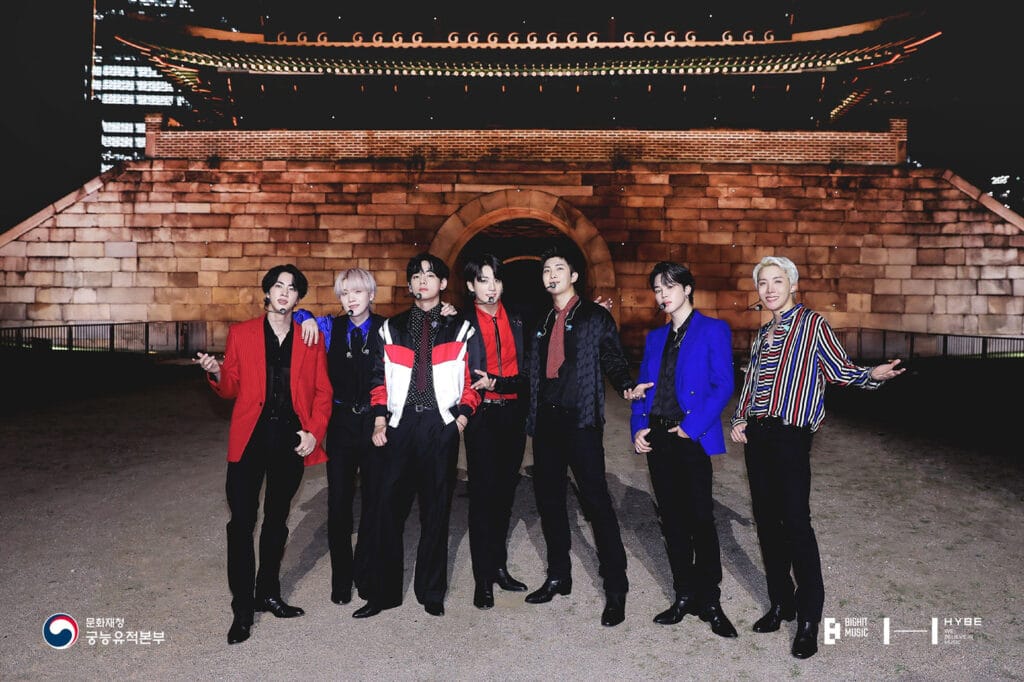
BTS and The Deep Historical Meaning Behind Their Mega Concert in Gwanghwamun
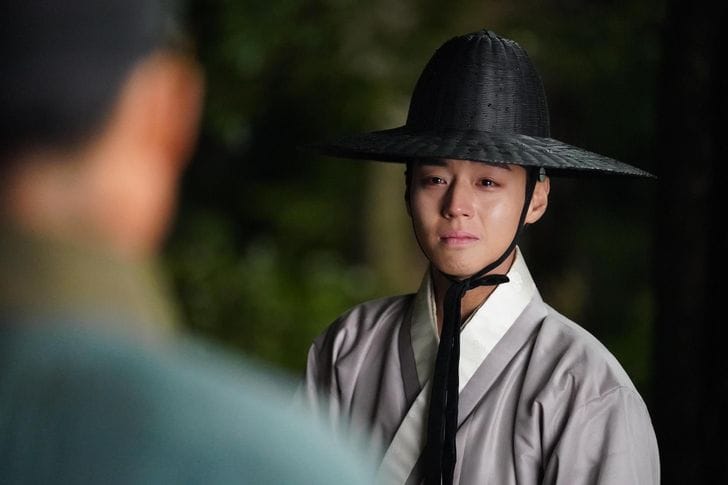
“The King’s Warden”: The Box Office Smash Hit That Sparked an Unusual Digital Revenge in Korea

“Boyfriend on Demand”: The Netflix K-drama where BLACKPINK’s Jisoo seeks the perfect romance (and her acting redemption)

Seollal: A Deep Journey into the Meaning of Lunar New Year in Korea

“The Art of Sarah,” Your Next 2026 Netflix Obsession
Attention,…