 R.C
R.C If you could soar above the Korean peninsula today, you would witness a phenomenon that only occurs twice a year: the highways connecting Seoul to the provinces are dyed red by the brake lights of millions of cars, while the vibrant capital, usually noisy and frantic, rests in an almost sepulchral silence. It is not an apocalypse; it is Seollal (설날).
Today, February 17, 2026, marks the beginning of the Lunar New Year, specifically the Year of the Horse. But defining Seollal simply as a “change of year” would be scratching the surface. For Koreans, this date is the true spiritual reboot, a moment when linear time stops to honor the cycle of life, death, and family.
More Than a Date on the Calendar
While in the West, January 1st is celebrated with fireworks and champagne, Seollal is a deeply introspective festival based on respect. Its roots lie in Confucian philosophy, which dictates that the foundation of society is filial piety (hyo).
The lunar calendar, guided by the cycles of the moon, determines the exact date each year, generally moving between late January and mid-February. This ancestral agricultural system continues to govern the emotional life of Korea: no matter how modern and technological Seoul may be, when the new moon arrives, the entire nation turns its gaze toward its rural roots and its ancestors.
GET THE HOTTEST 2026 K-BEAUTY TRENDS DELIVERED STRAIGHT TO YOUR DOOR! 📦 ENJOY FREE SHIPPING ON ORDERS OVER $60 SHOPPING AT KOREA’S #1 BEAUTY STORE. DON’T MISS OUT ON THE SALES AND OFFERS, THEY ARE TRULY INSANE! SHOP HEREThe Dawn Ritual: Charye and the Connection with the Beyond
Seollal morning does not begin with gifts, but with the aroma of ritual food. In traditional homes, families wake up early to perform the Charye (차례).
Imagine a low wooden table filled with food placed with geometric precision: fruits with the tops cut off so the spirits can “eat” their essence, fish, meats, and rice cakes. There is no room for improvisation; each dish has its assigned cardinal point. The most curious detail is the absence of strong spices like garlic or red pepper—staple ingredients of daily Korean cuisine—but forbidden at this table because it is believed they ward off the spirits.
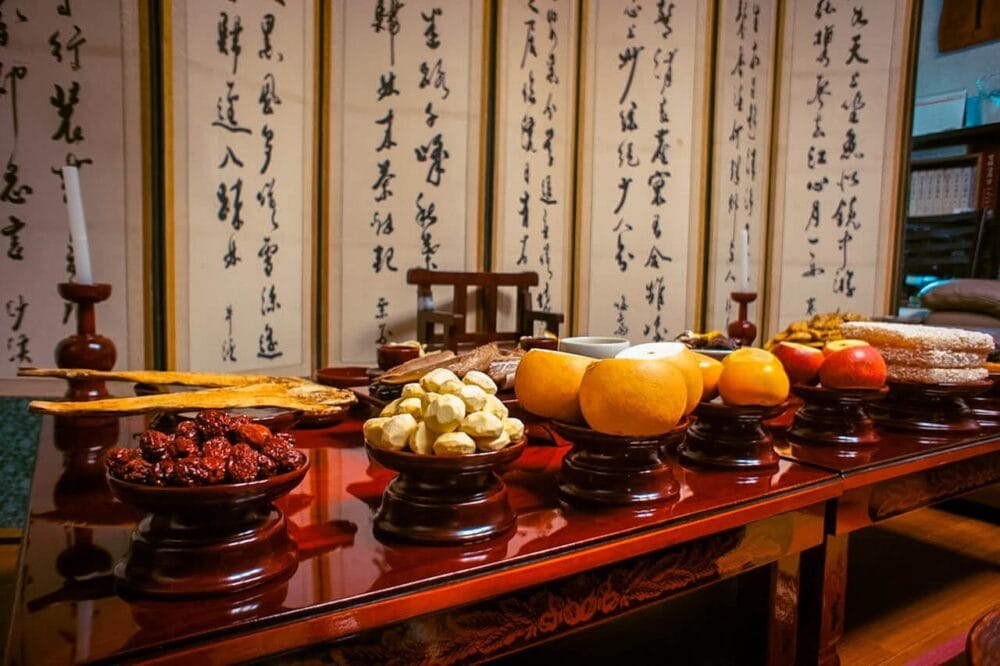
During this rite, the family prostrates themselves before the tablets or photos of their ancestors, inviting them to share the meal. It is a moment of silence and gratitude. In the Korean mindset, deceased grandparents and great-grandparents have not fully gone; they continue to watch over the family’s fortune, and Seollal is the time to renew that sacred pact between the living and the dead.
Sebae: The Weight of a Bow
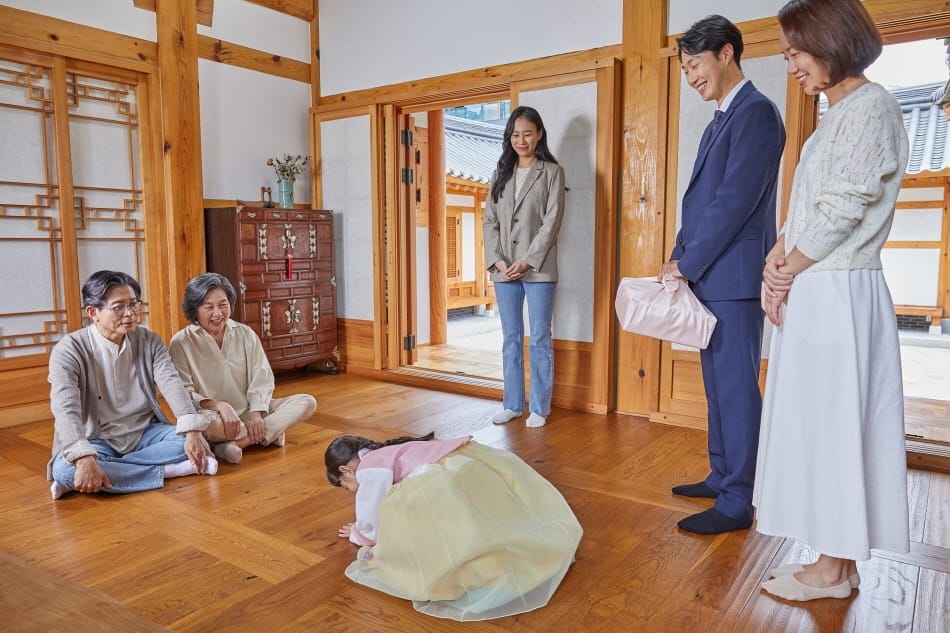
Once the ancestors have “eaten,” attention turns to the living. Here occurs the Sebae (세배), the deep bow we see so often in K-dramas.
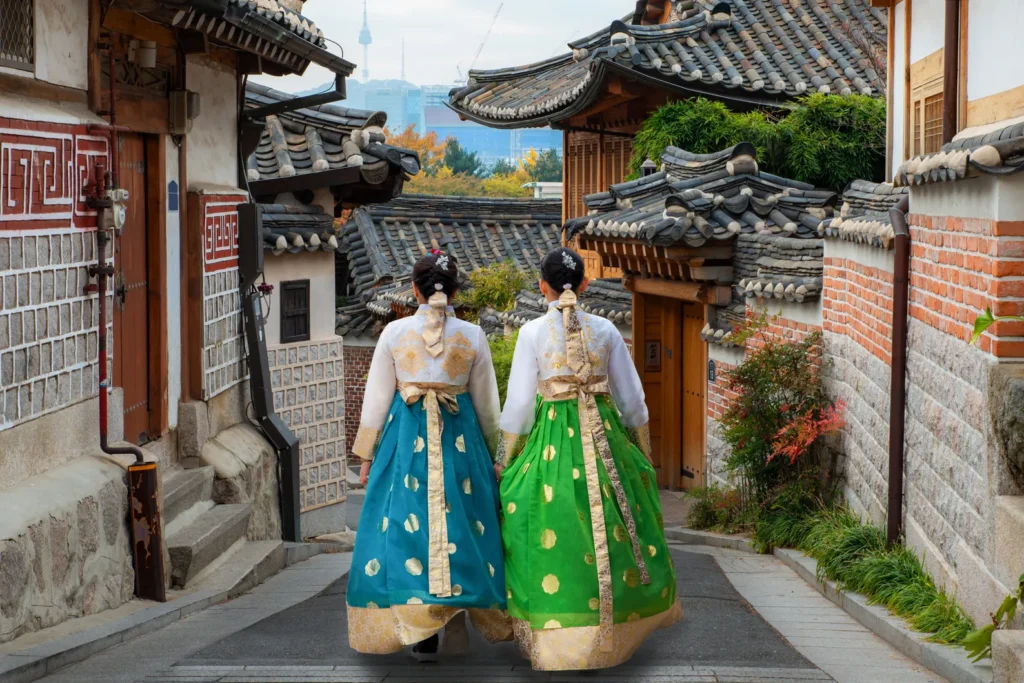
It is not a simple greeting. The younger members, dressed in their finest Hanbok (the traditional attire flooding Instagram today), kneel on the floor and bow until their foreheads touch the ground in front of their elders—grandparents and parents. Upon rising, they pronounce the phrase you will hear endlessly these days: “Saehae bok mani badeuseyo” (새해 복 많이 받으세요), which literally wishes that you receive many blessings or “fortune” in the new year.
The elders’ response is wise and generous: they offer words of advice (deokdam) and, most anticipated by the children, hand out the Sebaetdon. This lucky money is not handed over carelessly, but inside decorated envelopes or traditional silk bags (bokjumeoni), symbolizing that prosperity must be treated with respect.
From the Stillness of Rituals to the Noise of Celebration
Once the solemnity of the Charye (ancestor rite) ends and breakfast is cleared, the atmosphere in Korean homes changes radically. Respectful silence gives way to laughter and, above all, the unmistakable sound of four wooden sticks hitting the floor.
If you walked through a public park today or peeked into the living room of an extended family, you would see Yutnori (윷놀이) in action. It is not a simple board game; it is the friendly battlefield of Seollal.
Imagine a cloth board, four tokens per team, and four wooden sticks with one flat side and one round side acting as dice. The “clack-clack” sound of clashing wood is the soundtrack of the afternoon. Here, age doesn’t matter: grandparents and grandchildren scream with excitement (or frustration) while betting on who will wash the dinner dishes or who will buy the snacks. It is in this joyful chaos that true modern family bonding is woven.
Stepping outdoors, the winter sky fills with color. Yeonnalligi (연날리기), or kite flying, is not just a childhood pastime. Traditionally, people wrote their worries or bad luck on the kite and cut the string to let it fly away, taking the misfortunes of the old year with it.
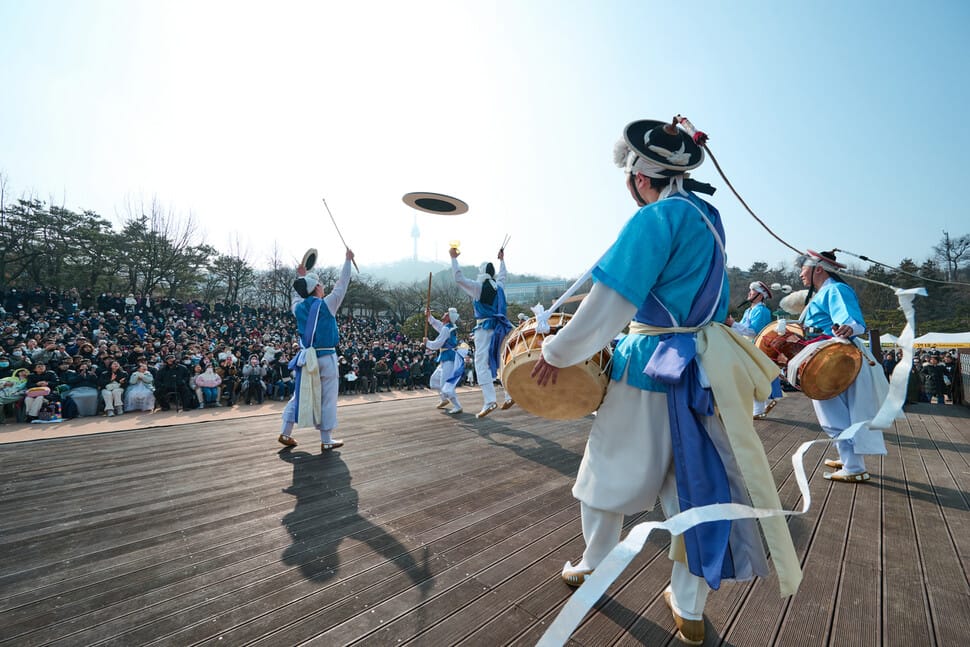
And if you are lucky, you will see an acrobatic dance that defies gravity: Neolttwigi (널뛰기). It is a seesaw, but not like Western ones. Here, it is played standing up. It is said that this game was born in ancient times so that women, confined within the walls of their homes, could jump high enough to see the outside world for an instant. Today, it is a spectacle of skill and laughter in palaces and plazas.
The Mystery of the White Soup: Why Everyone Has a Birthday Today?
If you travel to Korea and someone asks you how many bowls of Tteokguk you have eaten, they are not asking about your appetite, but your age.
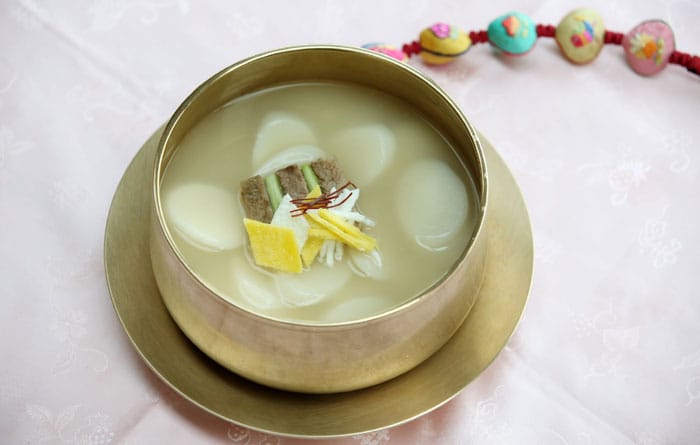
Tteokguk is a clear beef broth soup with thin slices of rice cake (tteok). Culturally, it is said that one does not age another year upon reaching their birthday, but upon eating this soup on Seollal. The shape of the rice slices is crucial: they are white to symbolize purity and rebirth, and round like ancient coins to attract wealth. Eating it is a symbolic act of absorbing the light and fortune of the coming year. In the old days, if you didn’t eat your soup, you couldn’t say you were a year older!
TAKE A LOOK AT OUR Shop! FIND K-BEAUTY, K-POP, AND FAN MERCH PRODUCTS JUST FOR YOU!!!
The Stress Behind the Beauty: The “Holiday Syndrome”
However, not everything is poetry. Seollal carries an immense social burden, known colloquially as “Holiday Syndrome” (Myeongjeol Syndrome).
For decades, the weight of preparing the immense amount of food for the rituals fell exclusively on the women of the family, especially the daughters-in-law, who spent entire days cooking restlessly under the critical gaze of their in-laws. Although this is changing rapidly with new generations opting to order pre-made food or travel abroad to avoid family stress, it remains a latent tension in Korean society that is often discussed in forums and news during these dates.
What Happens if You Are a Tourist During Seollal?
If your trip to Korea coincided with these dates, you will notice a unique atmosphere. Seoul empties out. It is the golden moment to visit the Five Grand Palaces (such as Gyeongbokgung), which traditionally open their doors for free during the holiday. Seeing entire families walking in Hanbok through the ancient royal courtyards under the cold Korean winter is one of the most beautiful postcards you can capture; there is a vibrant circuit waiting if you know where to look.
The “Ghost Seoul” vs. The “Alive Seoul”:
- What you will find closed: Forget about shopping at giants like The Hyundai Seoul, Shinsegae, or Lotte Department Store. Most close on Seollal day and sometimes the following day. Small family shops and many local restaurants also pull down their shutters.
- The tourist’s refuge: If you need action, head to the theme parks. Lotte World and Everland not only open but organize Lunar New Year themed parades. The N Seoul Tower and the COEX Mall (with its famous library) are other safe havens that operate 365 days a year.
- The perfect photo: The Five Grand Palaces (Gyeongbokgung, Changdeokgung, etc.) usually have free admission during the holiday. It is the golden time for the tourist: seeing the architecture of the Joseon Dynasty covered (possibly) in snow and full of locals celebrating their heritage is an incomparable visual experience.
Seollal is, in essence, the anchor that keeps dizzying and futuristic Korea tied to its soil, reminding them that, no matter how much they advance toward the future, no one gets anywhere without honoring where they come from.
Seollal in the K-Pop Era: Tradition Goes Viral
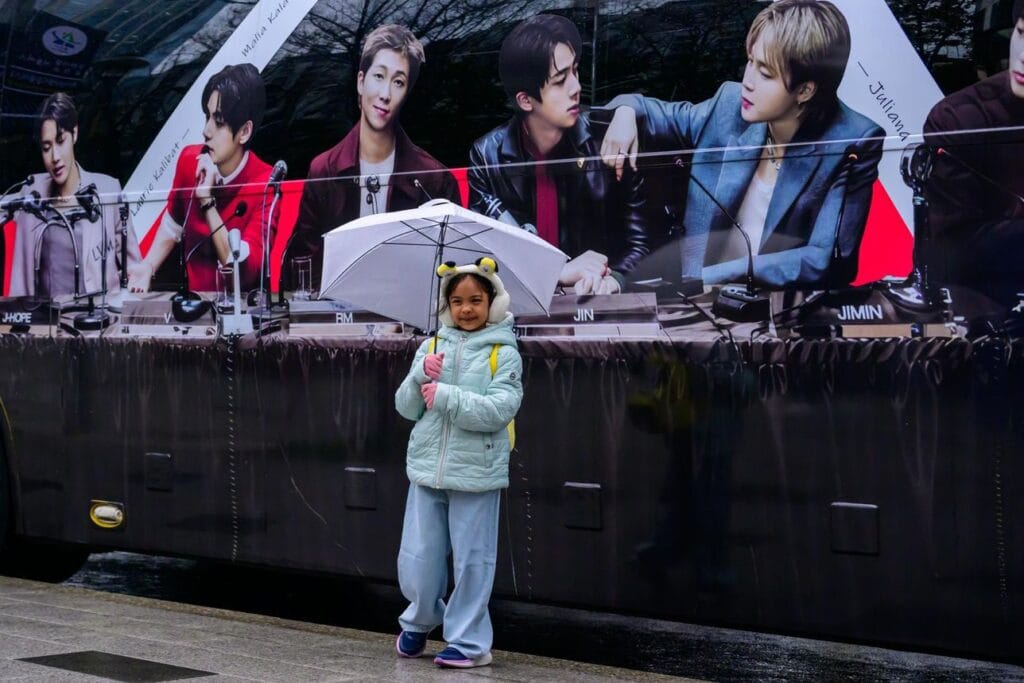
While families play Yutnori, the digital world explodes. For K-pop fans, Seollal is synonymous with high-impact visual content.
Idols, conscious of their role as cultural ambassadors, swap their stage outfits for exquisite silk Hanboks. But there is one event that paralyzes the fandom: the ISAC (Idol Star Athletics Championships). Although its broadcast varies year by year, it is historically filmed or aired around these dates. Watching your favorite groups competing in archery or relay races has become a modern tradition as deep-rooted as rice cake soup.
Additionally, if your favorite Idol couldn’t travel home, it is almost certain they will turn on a Live. In these broadcasts, you often see them eating Jeon (Korean pancakes) or playing traditional games with the other members in the dorm, creating a sense of “chosen family” that resonates deeply with international fans.
🧐 FAQs: What No One Tells You About Seollal
Here we resolve those cultural doubts that can save you from an awkward moment or help you better understand the news.
1. Why is it controversial to say “Chinese New Year”?
This is a matter of national identity. Although the holiday shares the lunar calendar date with China and other Asian countries, calling it “Chinese New Year” ignores the unique traditions of Korea, Vietnam (Tet), and other countries in the region. For a Korean, Seollal has its own rituals, food, and attire. The correct and internationally respectful term is “Lunar New Year.”
2. I am a foreigner, can I perform the Sebae bow?
Absolutely! In fact, it is a gesture that melts hearts. If you are invited to a Korean home and, at the right moment, perform the deep bow to your host’s grandparents or parents, you will be viewed with immense respect. A foreigner is not expected to know the protocol, so the effort of trying is valued double. (And you might even receive a tip!).
3. What should I gift if invited to a home during Seollal?
Forget about just bringing a bottle of wine. On Seollal, gifts are practical and, sometimes, curious to Western eyes. The most popular gift sets in supermarkets include premium canned tuna, Spam (canned ham), high-quality cooking oil, expensive fruits (giant pears or apples), or health products like red ginseng. Gifting food or health is the supreme way to demonstrate affection.
4. Is Seollal only happiness?
We shouldn’t romanticize everything. There is real pressure on young people. During family gatherings, elders often ask direct and uncomfortable questions: “Have you found a job yet?”, “When are you getting married?”, “How much do you earn?”. This is so stressful that many young people prefer to stay alone in their apartments or travel abroad to avoid the interrogation, a growing social phenomenon in current Korea.

Mark Lee Leaves NCT and SM Entertainment After 10 Years
The Comeback of the Century! Everything About BTS’s “Arirang”, the March 21 Concert, and Their Global Impact
Why Did BTS Name Their New Album Arirang? The Secret Behind the Meaning of Its 14 Songs
BTS and The Deep Historical Meaning Behind Their Mega Concert in Gwanghwamun
“The King’s Warden”: The Box Office Smash Hit That Sparked an Unusual Digital Revenge in Korea

Qué fascinante artículo, me encanta aprender más sobre las tradiciones coreanas. ¡Gracias por compartir esta hermosa perspectiva!
Gacias por leerlo y apoyar el blog!!!