
 R.C
R.C If you are watching the second season of “Culinary Class Wars” on Netflix, it is easy to be blinded by the glitter. We see them enter in their immaculate chef jackets, behaving like culinary royalty, owners of Michelin restaurants where getting a reservation is impossible.
But there is something the cameras don’t show at first glance about the chefs of “Culinary Class Wars 2.” Behind that technical perfection and elegance lie dark pasts, tragedies, and plot twists that would make any K-Drama look boring.
The chefs of “Culinary Class Wars” this season are, literally, an unexpected mix full of surprises. From war veterans who defused bombs, fugitives who slept on the streets, converted religious devotees, to geniuses who entered the kitchen because of a drunkenness; this group of people is an example of resilience and self-improvement worth knowing.
Get ready, here we tell you the cinematic—and sometimes heartbreaking—stories of the protagonists dominating 2026.
Anh Sung-jae: From Defusing Bunkers in Iraq to 3 Michelin Stars
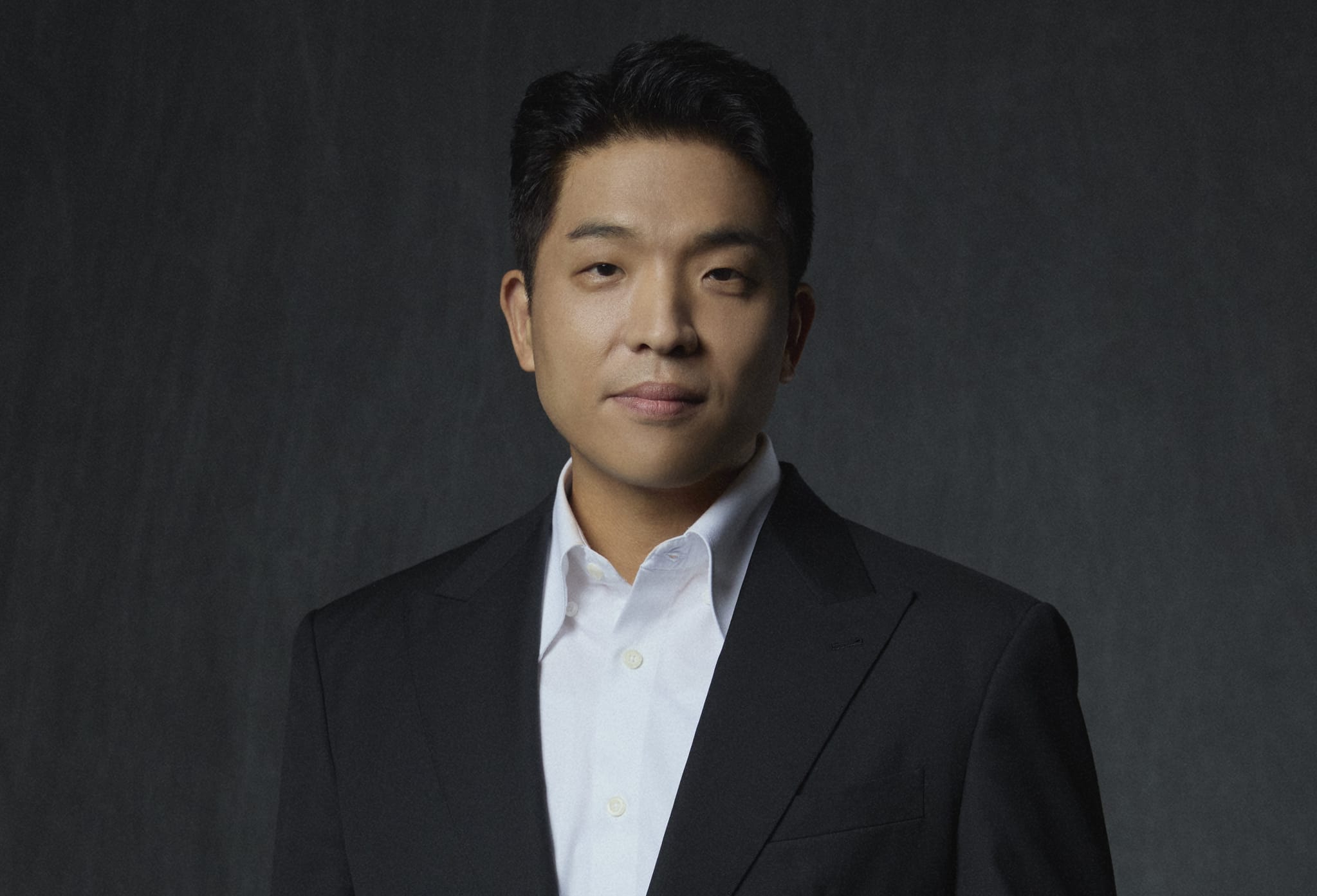
If the show has a visible face of authority, it is him. Anh Sung-jae, the owner of Mosu, commands respect from all chefs of “Culinary Class Wars” with just a glance. But before holding tweezers to plate delicate herbs, his hands held explosives in the desert.
His story is the definition of survival. Raised as an immigrant in California, his youth had no glamour; he spent it working in small businesses his family ran in pursuit of the American Dream, from sock or t-shirt shops to a Chinese-American restaurant, before and after school.
But the most shocking part is his time in the US Army. Anh Sung-jae was not just any soldier: he served as a technician in Iraq. In a confession that left the public frozen, he revealed: “My assignment wasn’t to fire a gun. It was to enter Saddam Hussein’s bunkers, search for weapons, take them into the desert, and detonate them.”
He lived surrounded by death and explosions, something he hid from his family so as not to worry them. The welcome upon returning alive? A slap from his grandmother, furious about the secret. His destiny was to be a Porsche mechanic, but one day he saw students from Le Cordon Bleu in their white uniforms and, on an impulse, swapped engine oil for haute cuisine. He went from a war zone to working at The French Laundry, proving that even military discipline serves to create the most delicate art.
Choi Kang-rok: The “Otaku” Who Won Because He Was Drunk
He is one of the chefs of “Culinary Class Wars” most loved by fans. Shy, with an otaku vibe and a look that seems to apologize for being talented. Choi Kang-rok‘s story is proof that talent sometimes needs a push from bad luck (and alcohol).
Originally, he wanted to be a drummer, but failed. He dropped out of his Spanish studies degree. He failed in his first two sushi businesses and ended up totally broke, living in a Buddhist temple and then working as a salaryman at a tuna trading company just to pay off debts.
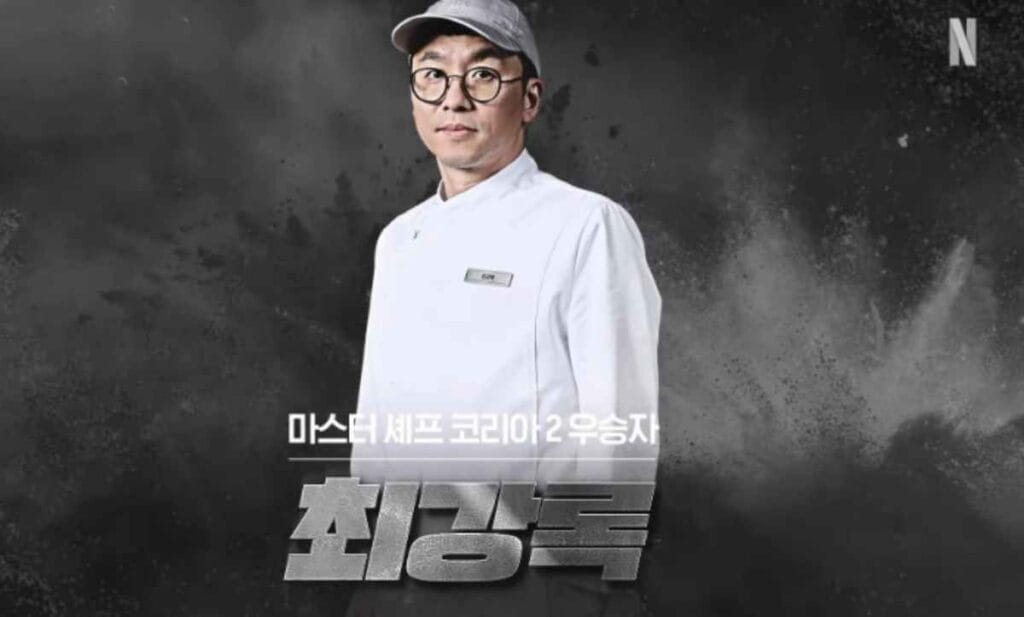
How did he get on TV? It wasn’t ambition. It was a manga. Choi confessed that his culinary “bible” was not a French cookbook, but the Japanese comic “Mr. Sushi King” (Shota no Sushi). And his entry to stardom was purely accidental: “I applied for Season 2 of ‘MasterChef Korea’ on an impulse during a night of heavy drinking,” he confessed.
And this time, it wasn’t a drunken mistake: he won that series and today is a legend who proves that life, sometimes, is better when you don’t plan it so much.
Son Jong-won: The “Good-vibe Man” and the Sudden Obsession
If Anh Sung-jae is the authority among chefs of “Culinary Class Wars” and Choi is the anti-hero, Son Jong-won is the “Prince Charming.” Currently, he is the man of the moment in Korea. His Instagram exploded (adding 300,000 followers in days) and Korean women have given him a new nickname: the “Good-vibe man.” Tall (1.84m), kind, and with impeccable fashion style (he wears Rick Owens and his “grunge glam” aesthetic), he is the son-in-law every mother wants.
But his story is that of someone who threw a secure future away for a passion. Son was the valedictorian of his private school and had a full scholarship for Civil Engineering at the prestigious Rose-Hulman Institute of Technology. He had, we could say, “his life set.”
However, a sightseeing visit to the Culinary Institute of America hypnotized him. Watching the chefs work caused such an obsession that he abandoned engineering, shocking everyone around him. Today, that impulsive decision has him running Eatanic Garden and L’Amant Secret, being the favorite chef of Korea’s “Chaebol” heirs, who show off their photos with him on social media.
Lim Sung-geun: The Runaway and the Tragedy of Victory
His “Ajeossi” (tough older man) personality and bravado are viral memes about the chefs of “Culinary Class Wars” this season. But behind that tough facade is a child who had to grow up by force.
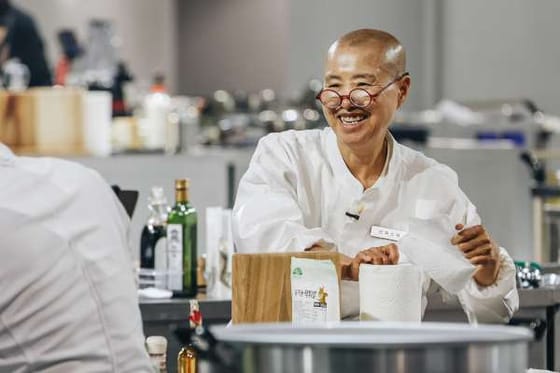
Lim Sung-geun didn’t choose cooking out of passion at first, but out of necessity. He ran away from home at 15. He lived on the streets and survived by sleeping in the kitchens of restaurants where he washed dishes. Little by little, he learned to cook by watching in secret and practicing at dawn with leftover ingredients or food about to spoil.

His life has been a rollercoaster of resilience. The most cinematic and cruel moment of his career happened in 2015. The same night he won the program “Korean Food Battle 3”, crying with emotion on national television, he received a devastating call: his three-story restaurant was on fire and burned to the ground. He lost everything materially at the exact moment he won glory. If that doesn’t forge character, nothing does.
Venerable Seonjae: The Faith That Changed Sides
Seeing a Buddhist nun compete in her gray robes and unshakable serenity among the chefs of “Culinary Class Wars” is striking. But her origin story has a religious twist.
The Venerable Seonjae was not born Buddhist. In fact, she grew up in a devout Protestant family, attending mission schools with dawn prayers. She was the perfect Christian. Her conversion to Buddhism at 25 was a shock to her circle, but what led her to the kitchen was a human tragedy.
She doesn’t cook for gourmet pleasure. Seonjae dedicated herself to “Temple Food” after seeing a fellow young monk die from malnutrition. She realized the system was failing and dedicated her life to studying how food can save and sustain spiritual practice. Her presence on the show is not for fame; it is a life mission.
The chefs of “Culinary Class Wars” this season teach us that the best ingredient is not truffle or caviar. It is the life story that each of these “White Spoons” and “Black Spoons” puts on the plate. Who is your favorite now that you know their past?
🧐 FAQs: Kitchen Secrets and “Gourmet” Facts About the Chefs of “Culinary Class Wars 2”
If you were left wanting more answers about the chefs of “Culinary Class Wars” after knowing their life stories, here are the technical facts and culinary curiosities that complete the profile of these masters.
1. What ingredients is the nun Ven. Seonjae forbidden to use?
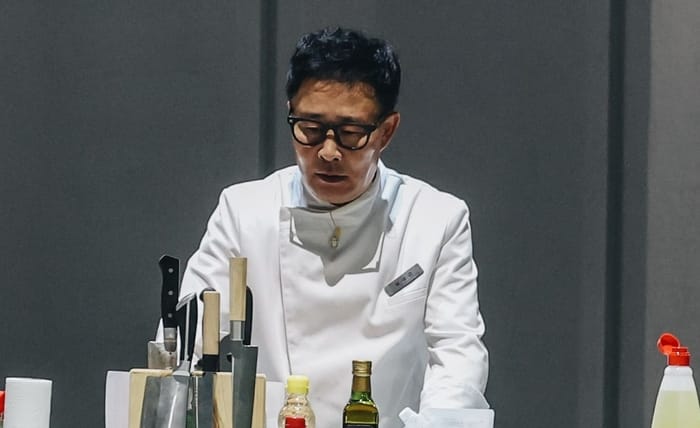
Although in the show she competes against chefs who use everything, “Temple Food” has strict rules. The one we all know is that she cannot use meat, but there is one more. She does not use the “Oshinchae” (five pungent vegetables): garlic, green onion (scallion), chives, onion, and leeks. According to Buddhism, these ingredients generate excessive heat in the body and interfere with meditation and spiritual control. Getting so far among the chefs of “Culinary Class Wars” without using garlic or meat of any kind in Korean cuisine is an impressive technical feat.
2. What happened to Judge Anh Sung-jae’s restaurant “Mosu” recently?
This is the news that shook foodies in Seoul. Despite being the only restaurant with 3 Michelin Stars in Korea, Mosu closed its doors temporarily in early 2024 due to a contract dispute with its investment partner (CJ Group). Currently, Anh Sung-jae is preparing the reopening at a new location in Hannam-dong on his own, and surely it will have a months-long waitlist again to enjoy his exquisite dishes.
You can also read Culinary Class Wars Season 2: Legends, Michelin Stars, and the Shadow of Controversy
3. Why is Choi Kang-rok known as the “Master of Stew”?
In his previous participation in MasterChef Korea 2, he went viral not for sushi, but for a braised chicken dish. His phrase “And then… you stew it” (Jolim) became a national meme in Korea years ago. He is famous for using slow-cooking techniques and sweet soy sauces that are his personal signature, dishes that continue to make him stand out among the chefs of “Culinary Class Wars 2.”
4. Is it normal for Son Jong-won to run two Michelin restaurants at the same time?
No, it is an anomaly in the industry. Generally, an Executive Chef focuses on a single venue to maintain quality. Son Jong-won is an exceptional case because he simultaneously leads L’Amant Secret (1 Star) and Eatanic Garden (1 Star), both located in the same hotel, which is an advantage, the Josun Palace, but with totally different menus and concepts. He is considered one of the hardest-working and most organized chefs in the industry today and is also one of the most beloved chefs of “Culinary Class Wars 2.”
5. What does it really mean for a chef to be a “Black Spoon”?
Among the chefs of “Culinary Class Wars” in the show’s structure, the 80 “Black Spoon” chefs are anonymous. They are not allowed to reveal their real names on screen until they manage to survive certain advanced rounds. They are only known by nicknames that describe their style (e.g., “Cooking Monster,” “Triple Star,” “Self-Made Chef”). This is to ensure that the initial judgment is purely on taste and not on the fame of their name.
6. What is the recording set like to fit 100 kitchens for all the chefs of “Culinary Class Wars”?
The scale of Netflix production is massive. The set of “Culinary Class Wars” covers 1,000 pyeong (approx. 3,300 square meters). They had to build specific water, gas, and drainage systems to support 40 industrial kitchens running at the same time during the massive first round, something never done before in Korean television.
7. What kind of food does Lim Sung-geun teach on his YouTube channel?
Despite his background in high-level state banquets, his channel Im-jjang TV is famous for being accessible. He specializes in homemade “Hansik” (Korean food), teaching tricks so housewives and beginners can make kimchi, stews, and banchans (side dishes) with professional taste but without complicated tools.
8. Who is the common “mentor” of many of these elite chefs?
Although they compete against each other, many high-cuisine chefs in Korea (including Son Jong-won) have passed through the kitchens of Corey Lee at the restaurant Benu (San Francisco). Corey Lee was the first Korean chef to obtain 3 Michelin stars in the US, and he is considered the “godfather” who trained the current generation of young chefs now shining in Seoul with their style of technical fusion and precision.

BTS and The Deep Historical Meaning Behind Their Mega Concert in Gwanghwamun
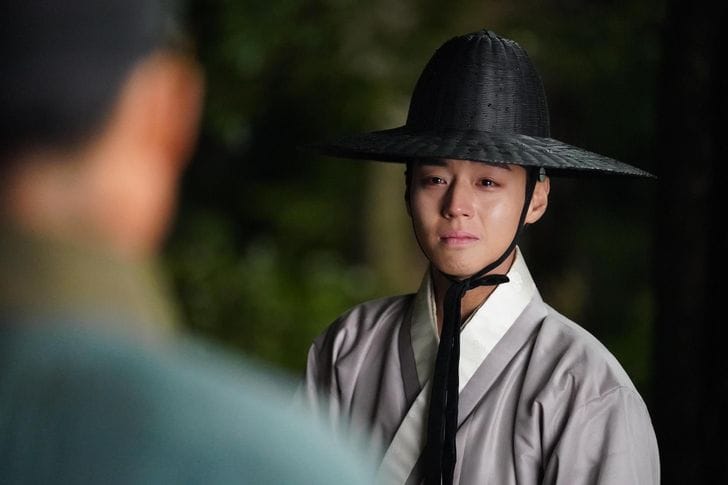
“The King’s Warden”: The Box Office Smash Hit That Sparked an Unusual Digital Revenge in Korea

“Boyfriend on Demand”: The Netflix K-drama where BLACKPINK’s Jisoo seeks the perfect romance (and her acting redemption)

Seollal: A Deep Journey into the Meaning of Lunar New Year in Korea

“The Art of Sarah,” Your Next 2026 Netflix Obsession
Attention,…



[…] YOU CAN ALSO READ War Heroes, Runaways, and Monks: The Chefs of Culinary Class Wars 2 and the Incredible Stories You D… […]
[…] YOU CAN ALSO READ War Heroes, Runaways, and Monks: The Chefs of Culinary Class Wars 2 and the Incredible Stories You D… […]