
 R.C
R.C If you pull up the Naver Map app today and search for Gwangneung, the royal tomb of King Sejo (the seventh monarch of the Joseon Dynasty), you won’t find reviews about the peaceful scenery or parking tips. Instead, you will stumble upon an avalanche of one-star ratings and furious comments stating: “How could you do that to your own nephew?” or “Burn in hell forever, psychopath.” The situation escalated so quickly in recent weeks that Kakao, Korea’s other major mapping platform, had to activate its “safe mode” to temporarily hide the comments.
The culprit behind this peculiar thirst for digital revenge for crimes committed over five hundred years ago is none other than “The King’s Warden”, the historical drama directed by Jang Hang-jun that is sweeping Korean cinemas. Since its premiere on February 4, 2026, the film has not only easily surpassed its break-even point of 2.6 million moviegoers, but it has already accumulated almost 6 million tickets sold, crowning itself as the undisputed king of the Lunar New Year box office and even securing an invitation to the main competition at the Udine Far East Film Festival in Italy.
Want to glow like your bias? ✨ Find the exact K-Beauty products used by your favorite Idols here! Don’t miss the insane daily offers and enjoy FREE SHIPPING on orders over $60. Shop now at Olive Young Global! 🛍️The Historical Tragedy Behind the Success of “The King’s Warden”
To understand the public’s fervor, one must travel back to the year 1453. The film reimagines the final days of King Danjong, a tragic monarch who inherited the throne as a mere child after his father’s death. His reign was short-lived: his own uncle, Grand Prince Suyang (who would later become King Sejo), orchestrated a bloody coup, assassinated loyal officials, and forced his nephew to abdicate.
Stripped of his title and demoted to a prince, the teenage Danjong was exiled to the remote mountain valleys of Yeongwol, in Gangwon Province, where he met his death a few months later. The official historical records of the Joseon Dynasty differ chillingly on how he died. While the early annals, written under his uncle’s rule, dryly state that the boy hanged himself, records from later reigns suggest he was forced to drink poison or even strangled with a bowstring.
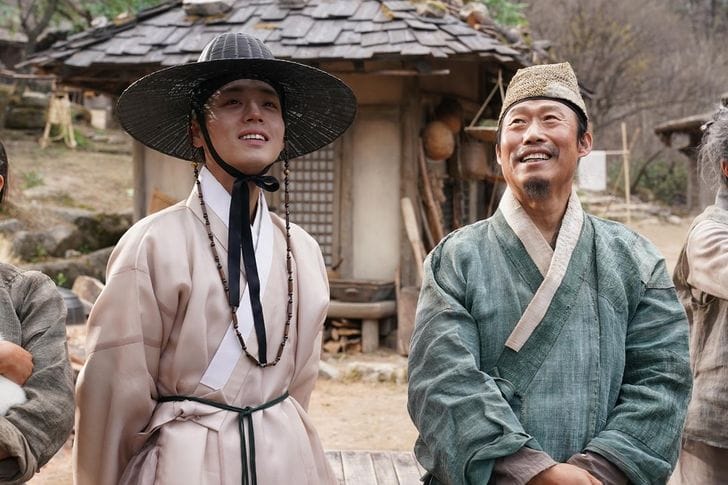
Sejo’s royal decree was ruthless: anyone who attempted to recover the young king’s body would suffer the extermination of three generations of their family. According to legend, the corpse was thrown into the river until a local official named Eom Heung-do, risking his entire lineage, recovered it under the cover of night and buried it in the snow-capped mountains before fleeing forever.
The Breakthrough of Park Ji-hoon and the Magic of Fiction
It is in this historical void that director Jang Hang-jun weaves the emotional narrative of “The King’s Warden”. The film reimagines the figure of Eom Heung-do, masterfully played by veteran Yoo Hae-jin, presenting him as a cunning village chief who initially sees the exiled king as an opportunity to profit, but who ends up forming a genuine and protective bond with him.
However, it is Park Ji-hoon who has stolen the public’s heart. In his first leading role in a feature film, the former K-pop idol has managed to completely shed his old image. Through restrained dialogue and minimal physicality, Park Ji-hoon anchors the film using only his gaze, successfully conveying the deep emotional turmoil of a young king stripped of everything. His performance has resonated so deeply with Gen Z that social media has been flooded with affectionate nicknames like “Danjong Oppa,” “My Danjong-nim,” or “Hong-wi Oppa” (referencing the king’s personal name), humanizing a historical figure for a contemporary audience.
The counterbalance to this story falls on Yoo Ji-tae, who embodies Han Myung-hoe, the ruthless strategist who orchestrated Sejo’s rise. Interestingly, King Sejo never appears on screen, but Yoo’s brilliant portrayal of his Machiavellian ally has been enough for his own tomb in Cheonan to also fall victim to the bombardment of negative reviews and memes on navigation apps.
From Digital Outrage to Tourist Pilgrimage
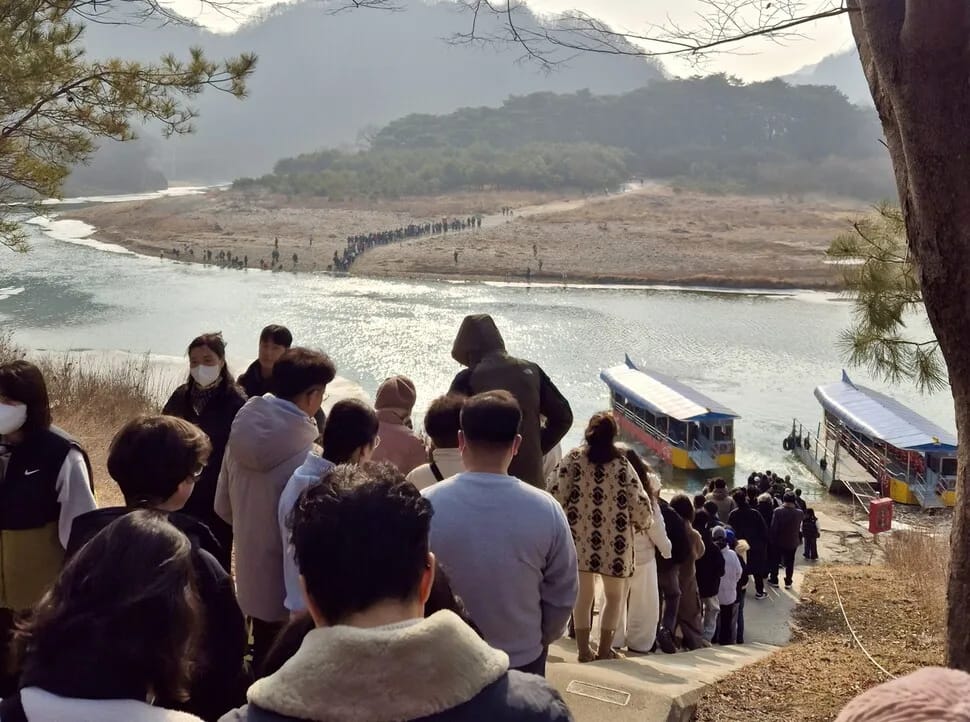
The impact of “The King’s Warden” has transcended screens and internet complaints to revitalize the local economy. Cheongnyeongpo, Danjong’s isolated exile site in Yeongwol—a peninsula surrounded by water on three sides and cliffs on the fourth, accessible only by boat—has experienced an unprecedented tourism explosion.
You can also read “The Art of Sarah,” Your Next 2026 Netflix Obsession
During the Lunar New Year holiday, more than 10,600 people waited in long lines at the dock to cross the river, touring the king’s modest reconstructed quarters and climbing to the lookout point from where, as the story goes, the youth gazed toward the capital longing for the wife he would never see again. This figure is five times the number of visitors from the previous year. Now, county officials are preparing for a massive turnout at the 59th Danjong Cultural Festival, scheduled for late April, proving that the power of a good story, well told, can bring poetic justice to a forgotten king five hundred years later.
🧐 FAQs and Trivia: What “The King’s Warden” Doesn’t Tell You On Screen
1. Just how big is the box office success of “The King’s Warden”?
It is an absolute phenomenon. The film not only quickly surpassed its break-even point (estimated at 2.6 million moviegoers) but is currently approaching the impressive mark of 6 million tickets sold (having crossed 5.8 million in its third weekend). To put this into context, in all of last year (2025), only four films managed to cross the 5 million mark in South Korea.
2. Who is Park Ji-hoon, the young actor playing King Danjong?
Before moving all of Korea to tears in “The King’s Warden”, Park Ji-hoon (26) was known for something completely different: he was a K-pop superstar as a member of the wildly successful project group Wanna One. However, he had already been building a solid acting career and earning critical respect with his leading role in the acclaimed school action drama Weak Hero Class 1 (2022). This film marks his definitive breakthrough on the big screen.
3. What nicknames has Gen Z given Park Ji-hoon after the movie?
His minimalist performance, relying almost entirely on his expressive gaze, has resonated so deeply with young audiences that social media has been flooded with affectionate nicknames for the historical figure. Fans are calling him “My Danjong-nim,” “Danjong Oppa,” and even “Hong-wi Oppa” (using the king’s actual birth name)—a level of familiarity unimaginable for a Joseon Dynasty monarch.
4. Who is the director behind “The King’s Warden”?
The genius behind the camera is Jang Hang-jun, a filmmaker and beloved personality on Korean television. Jang has a special talent for blending genres and telling deeply human stories. Among his most notable previous works are the action comedy Break Out (2002) and the acclaimed sports drama based on a true story, Rebound (2023).
5. Reality vs. Fiction: Did the character of Eom Heung-do actually exist?
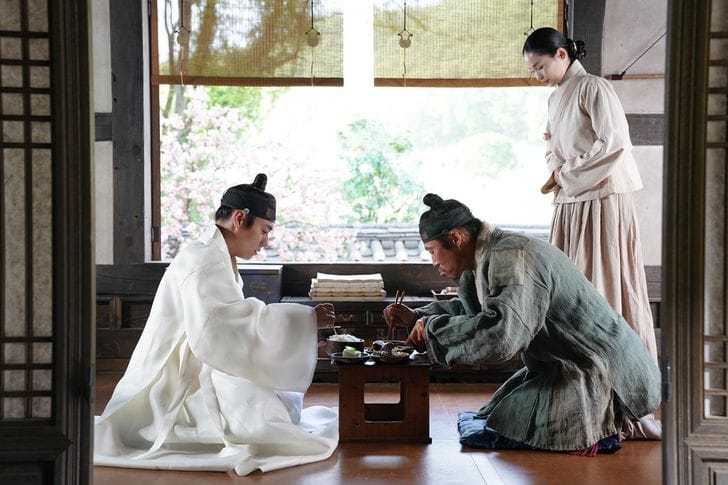
Yes, he did, but “The King’s Warden” takes fascinating creative liberties. In real history, Eom Heung-do was a low-ranking local functionary in Yeongwol who retrieved the king’s body. In the film, the director merges Eom’s figure with that of an anonymous court official and reimagines him as a cunning village chief (played by Yoo Hae-jin) to give more depth to his emotional bond with the exiled king.
6. Why did King Danjong take the throne as just a child?
Danjong’s premature ascension at age 10 (in 1452) was due to a previous tragedy. His father, King Munjong, had an extremely short and illness-plagued reign. Dying so soon, he left a child as the sixth monarch of Joseon, completely vulnerable to the ambition of his uncle, Grand Prince Suyang.
7. What did the government’s “official version” say about King Danjong’s death?
The most important record of the era, the Annals of the Joseon Dynasty (written during the reign of the usurper King Sejo), blatantly lies. The official text states that the boy, upon hearing of the execution of his sympathizers, “hanged himself” out of despair, and that the court gave him a proper funeral. Historians consider this version a complete farce to cover up the assassination.
8. What is the most disturbing (and gory) legend about his murder?
During King Sukjong’s reign, records included a chilling tale not seen in “The King’s Warden”. It is said that the royal inspector sent to kill Danjong hesitated and couldn’t go through with it. A young scholar volunteered to commit the murder, but as soon as he did, he began bleeding from his nine facial and bodily orifices, dropping dead instantly. History interprets this as a swift punishment from Heaven for killing the rightful king.
9. How was he killed according to unofficial historians?
Besides the poison theory, the compendium of unofficial histories Yeollyeosil Gisul, compiled by 18th-century scholar Yi Geung-ik, claims that a court attendant who had served the exiled monarch “fastened a long cord to a bowstring, pulled it tight through a window behind the seated king, and pulled hard,” strangling him.
10. Did Danjong ever regain his title as King?
Yes, but justice took over two centuries to arrive. He was stripped of his title in 1457 and demoted to “Prince Nosan.” It wasn’t until the reign of King Sukjong (between 1661 and 1720)—more than 200 years after his tragic and lonely death in the snow—that the Joseon court officially restored his title as King Danjong.

Mark Lee Leaves NCT and SM Entertainment After 10 Years

The Comeback of the Century! Everything About BTS’s “Arirang”, the March 21 Concert, and Their Global Impact

Why Did BTS Name Their New Album Arirang? The Secret Behind the Meaning of Its 14 Songs
BTS and The Deep Historical Meaning Behind Their Mega Concert in Gwanghwamun
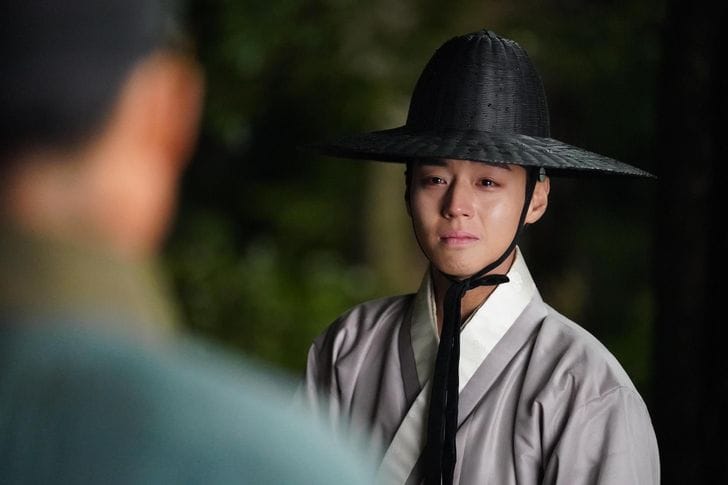
“The King’s Warden”: The Box Office Smash Hit That Sparked an Unusual Digital Revenge in Korea