

 R.C
R.C Hello, my Crazy about Korea! Today we are going to talk about something that every fanatic of the K-dramas has lived.
Have you ever been watching a series and the protagonist, who always called the gallant of the plot for its formal title (‘Director’, ‘Sir’), suddenly looks him in the eye and tells him… ‘OPPA’? And romantic music explodes! Or, on the contrary, have you felt the tension when a character calls a woman ‘Ajumma’ And she is deadly offended?
If it has happened to you, you know that the Spanish subtitles do not tell us the whole story. Those little words are Korean Honorifics, and they are the true secret language of your favorite series. understand the Honorifics in K-dramas It is the key to deciphering the subtext behind each scene.
Today, in this K-Drama Survival Guide, we bring you the definitive guide to decoding these terms. Get ready to understand your favorite dramas to a whole new level!
Why are honorifics in K-dramas so important?
One of the first things we learn when entering the world Hallyu It is that the Korean language is based on relationships. Age and social hierarchy are everything, and this is perfectly reflected in the use of Honorifics in K-dramas.
These words are not just titles; They are the emotional subtext of the series. The truth is that understanding these terms is key to capturing the nuances that subtitles simply cannot replicate, and believe me you will thank us. Let’s break down the most important ones!
❤️ Oppa (오빠)
- What does it mean: Literally, ‘older brother’.
- Who uses it: a woman to address a man older than her.
- The K-drama subtext: This is, perhaps, the most famous (and loaded!) word of all. It is used for blood brothers, but also for close friends… and boyfriends. In the K-dramas, the moment when a protagonist stops using a formal title and calls the protagonist ‘OPPA’ For the first time, it’s a statement! It is the universal signal that the romantic tension has changed and the relationship has passed into a plane of intimacy.
- Classic examples: We see it in dramas like ‘My Demon’ or in the iconic ‘Reply 1997’, where the use of ‘oppa‘It is central to the romantic plot.

Plan your next trip without overpaying, know the best prices here!!!
❤️ Nuna (누나), Hyeong (형) and Eonni (언니)
The rest of the family quartet!
- Nuna (누나): Used by a man to address an older woman (sister, friend, girlfriend). It is the basis of the entire genre of ‘Noona Romance‘The k-dramas where the protagonist is older (as in ‘Something in the Rain’ or ‘Romance is a Bonus Book‘).
- Hyeong (형): Used by a man to address another older man. It is a key term to show bromance, respect and camaraderie between male protagonists.
- Eonni (언니): Used by a woman to address another older woman. It is the basis of brotherhood relationships and SISMANCE (feminine friendship) in the dramas.
🎓 Seonbae (선배) and Hubae (후배)
- What does it mean: seonbae (senior) and Hubae (Junior).
- Who uses it: It is used in schools or workplaces to refer to someone with more age or experience (SEONBAE) or someone with less (HUBAE).
- The K-drama subtext: Subtitles always translate it as ‘senior’, but it is much more complex. ‘seonbae‘ implies respect, but also a mentoring responsibility. In office romance dramas (as ‘She Would Never Know’), the relationship seonbae-hubae It is full of tension. When a character stops using ‘seonbae‘And start using the first name, it’s a sign that professional lines are being erased!
🎓 The subtle turn of the honorifics in K-dramas: when the title disappears
True magic happens when the honorific disappears.
- -SSI (씨): It is a suffix of polite respect, used among colleagues or people who are not close.
- THE CHANGE: On ‘Proposal Business’ (Labor Proposal), the protagonist goes from calling her boss ‘President Kang‘ (a high hierarchy title) to call him ‘Tae-Moo SSi’ (Your first name + respect). This change is an emotional earthquake: it means that you no longer see it just as your boss, but as a man on the same level. The same thing happens in ‘Twenty-Five Twenty-One’ When the characters leave the ‘seonbae‘By their names.
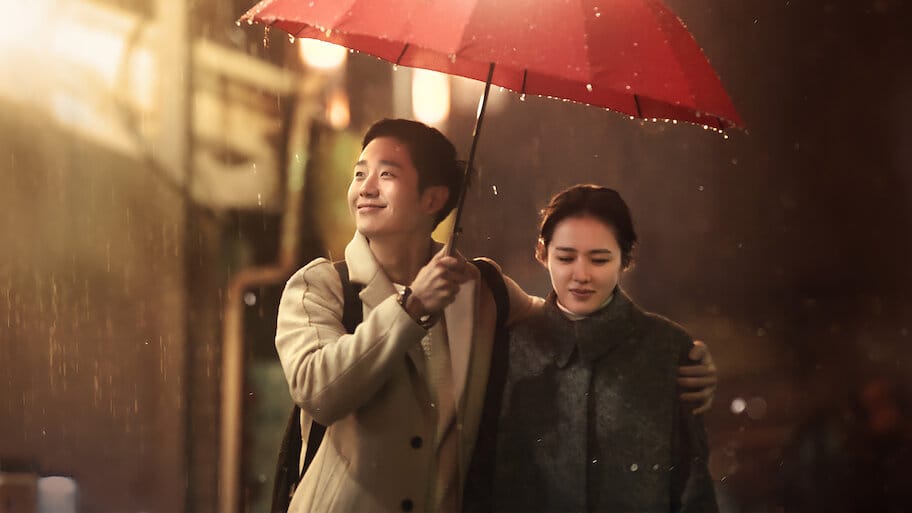
☕ajummaandAjeossi: The generational gap of the honorifics in K-dramas
These terms are fascinating and sometimes dangerous!
- Ajeossi (아저씨): middle-aged man.
- Ajumma (아줌마): middle-aged woman.
The K-drama subtext: These words can be respectful and affectionate (such as the ‘Jeossi’ in the masterpiece ‘My Mister’, which becomes a term of deep connection) or they can be derogatory.
‘Ajumma’ It is a more loaded word. Although it can be used affectionately for the owner of a restaurant, calling a woman who does not consider herself ‘middle-aged’ is a direct insult, hinting that she has ‘loss’ her femininity due to age. In dramas like ‘Love (ft. Marriage & Divorce)’, the protagonists use the term with self-critical humor, but it reveals the social stigma of aging.
Our ‘K-Drama Survival Guide’
understand the Honors in K-dramas It is our own passport to decode the nuances that are lost in the translation. Next time you see a scene and hear a ‘oppa‘or a’seonbae‘, you know it’s not just a word, it’s the plot unfolding!
Is there any other honorific that confuses you? What was the title change in a K-drama What excited you more? Tell us in the comments!
Frequently Asked Questions (FAQs): The K-Drama Survival Guide (Level 2)
If you already dominateoppaandseonbaeLet’s raise the level! Here we explain other key words and situations that will make you a true expert decoder of K-dramas.
1. What does the ‘-nim’ (님) suffix mean?
yes ‘seonbae‘EN’Senior‘, ‘seonbae-nim’ (선배님) is ‘Respected Senior‘. The suffix ‘-nim’ It is a booster of formal respect. It is added to job titles or family to show maximum courtesy.
- Examples in K-dramas: You will hear it in offices: ‘Bujang-nim‘ (Head of Department) or ‘daepyo-nim‘ (Executive Director/CEO). It is also used in the family (‘eomeo-nim’ for ‘mother’ in a very respectful way, usually the mother-in-law). If a character removes the ‘-nim’ from a title, it is a sign that the formality is breaking!
2. And what about ‘-ah’ / ‘-yah’ at the end of a name?
This is the opposite signal: Maximum informality and closeness. Adding ‘-ah’ (if the name ends in a consonant) or ‘-yah’ (if it ends in a vocal) is the casual way of calling someone.
- The K-drama subtext: You can only use this with very close friends of the same age or with people younger than you. If a boss suddenly calls his employee ‘min-ji-yah’ instead of ‘min-ji-ssi’, it’s a gesture of great affection… or a sign that they are coming out in secret!
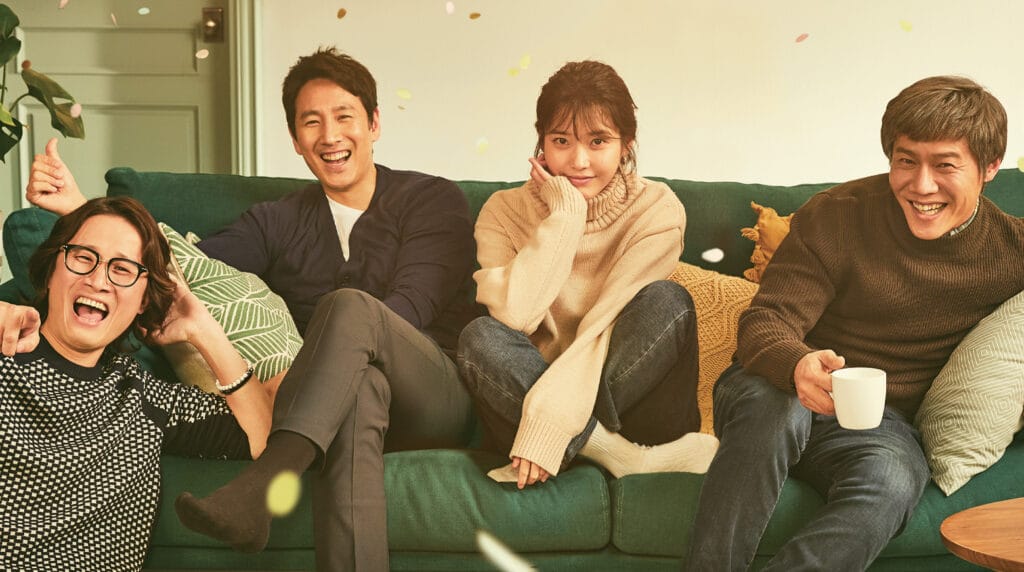
You can also read Netflix 2025 Big Bet on K-Content and K-Dramas
3. What exactly is ‘aegyo’ (애교) and why do they do it?
Surely you have seen it: a character (usually feminine, but sometimes masculine) acts in a exaggeratedly tender and childish, Speaking with a baby voice, pouting or using cute gestures. That’s the AEGYO.
- Why do they do it? It is a culturally accepted way of flirting, asking for a favor, or apologizing in a charming way. In the K-dramas, is a resource that the protagonists use to show their adorable side and ‘disarm’ the male protagonist.
4. Why are they always drinking soju in green tents?
Those tents (or sometimes red) are called ‘Pojangmacha’ (포장마차). They are street tents that sell comforting food (such as Tteokokki, , Odeng and fried chicken) and, of course, Soju (green rice liqueur).
- The K-drama subtext: In a drama, the Pojangmacha It is a ‘space of truth’. It is the place where the characters are going to let off steam after a bad day, where friends have deep conversations and where the drunken protagonists end up confessing their feelings. It’s scenario #1 for love confessions!
5. What does ‘daebak’ (대박) and ‘Aigoo’ (아이고) mean?
The two great exclamations!
- Daebak (대박): It literally means ‘a great success’ or ‘a big profit’. In modern speech, it is the word to say ‘Amazing!’, ‘Great!’ or ‘Wow!’. It is used to express surprise at something surprisingly good.
- Aigoo (아이고): This is the multipurpose expression for suffering. is the equivalent of ‘Oh, my God’, ‘oh, heavens’ or ‘what a pain!’. The characters use it to express fatigue, frustration, pain, disbelief, or sadness. It’s the favorite crutch of all ajummas in the dramas!
6. What does ‘Fighting!’ mean? (or ‘Hwaiting!’)?
Subtitles translate it as ‘Cheer up!’ or ‘good luck!’, and it’s exactly that. ‘Hwaiting’ (화이팅) It is a Koreanized word from the English ‘fighting’ (fighting).
- When is it used? Always! Before an exam, a job interview, an important match or just to encourage someone who is sad. It is the number one expression of support in Korea.
7. Why are shoes removed when entering a house?
This is fundamental in Korean culture and a rule of basic respect. Houses in Korea (and many traditional restaurants) have a floor heating system called ‘Ondol’ (온돌).
- The K-drama subtext: Historically, people ate, slept and lived on the ground. Therefore, entering with the shoes that stepped on the dirty street is a very serious lack of respect. Take off your shoes at the entrance (the Hyeongwan) and putting on slippers from home is the norm. Pay attention to the scenes where a character runs into a house without Take off your shoes: it is a sign of chaos, emergency or extreme rudeness!
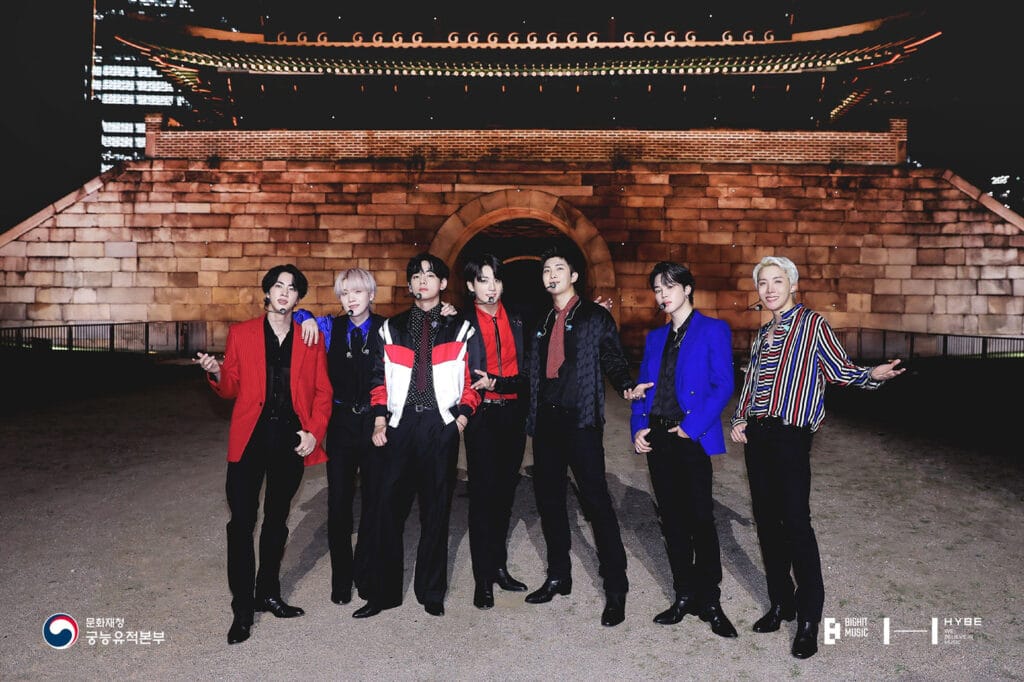
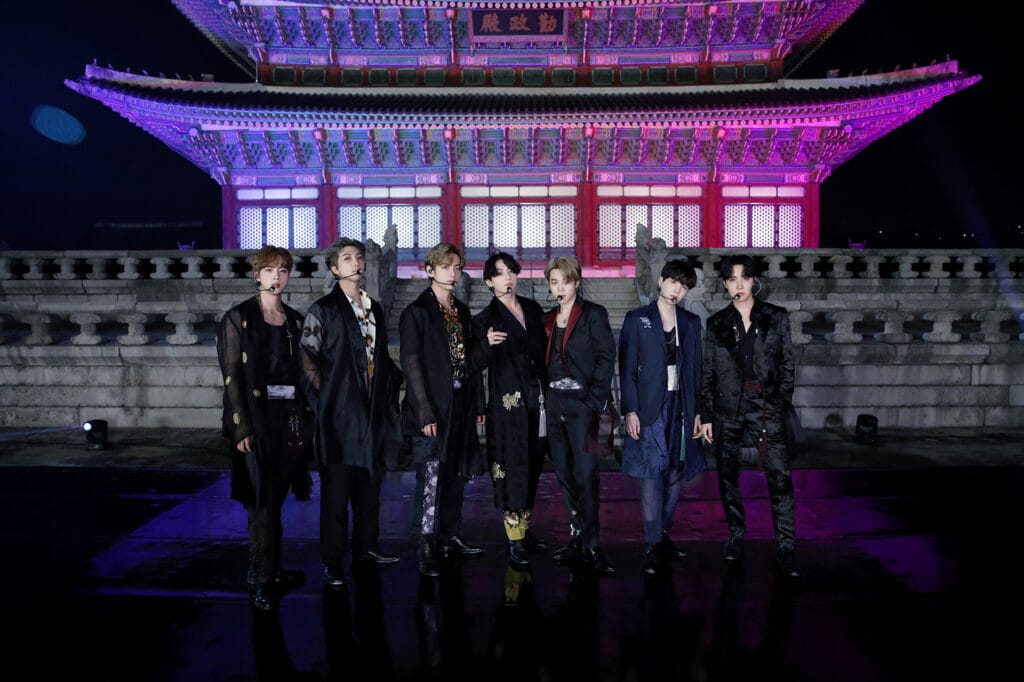
BTS and The Deep Historical Meaning Behind Their Mega Concert in Gwanghwamun
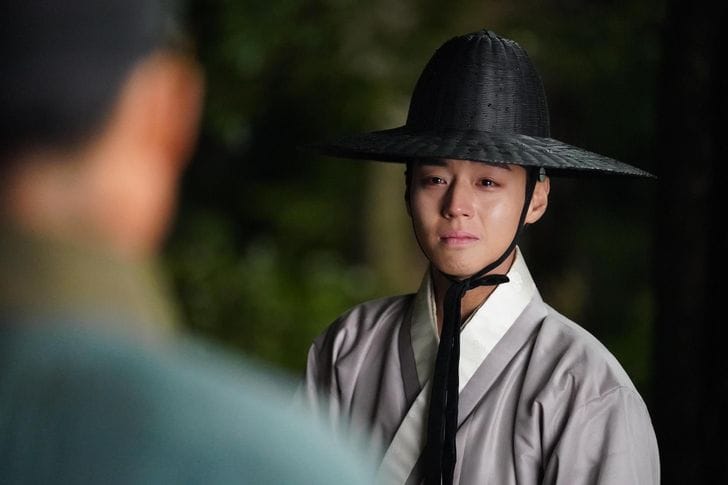
“The King’s Warden”: The Box Office Smash Hit That Sparked an Unusual Digital Revenge in Korea

“Boyfriend on Demand”: The Netflix K-drama where BLACKPINK’s Jisoo seeks the perfect romance (and her acting redemption)
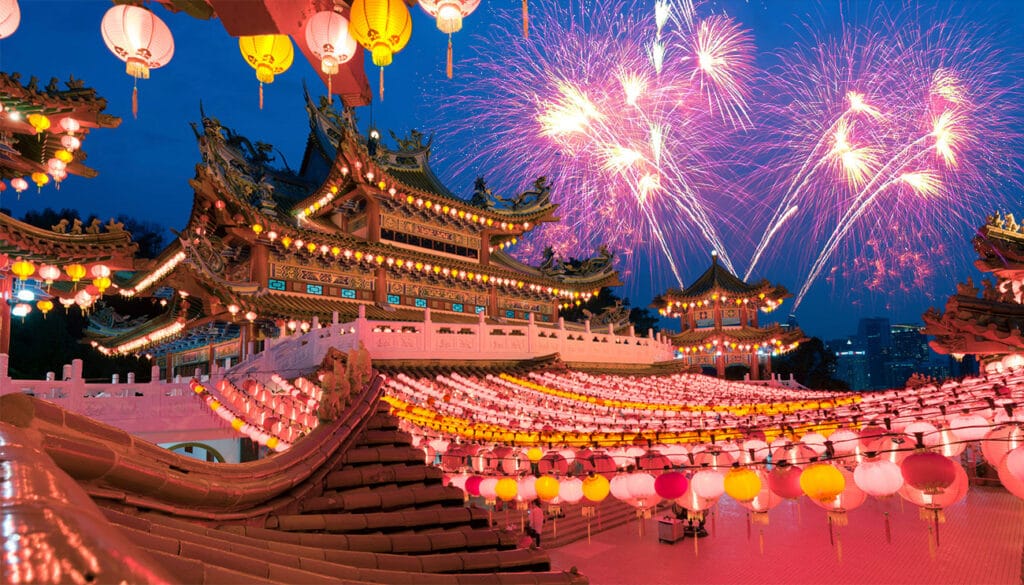
Seollal: A Deep Journey into the Meaning of Lunar New Year in Korea
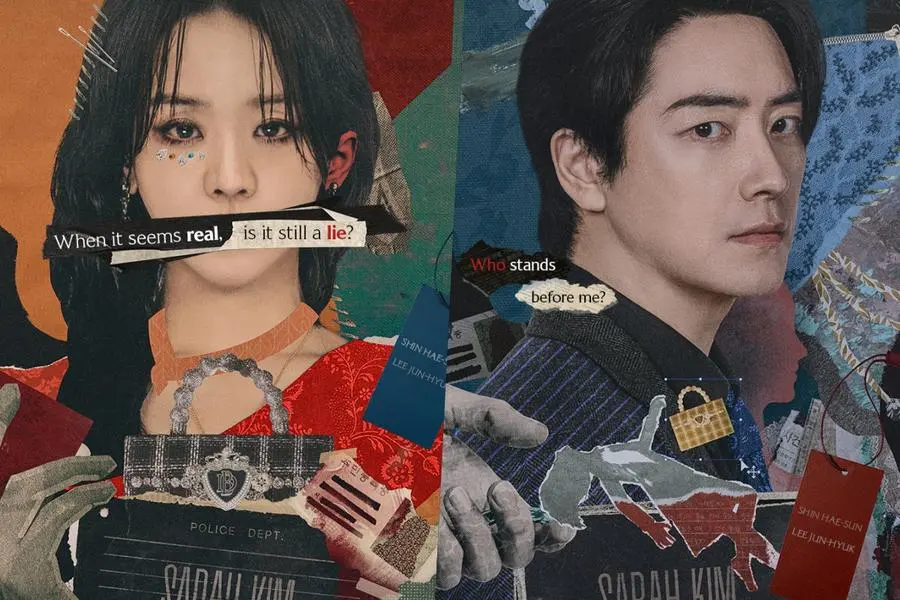
“The Art of Sarah,” Your Next 2026 Netflix Obsession
Attention,…

[…] TAMBIÉN PUEDES LEER Honorifics in K-dramas, “Oppa” or “Seonbae”? Never again confused with our ultimate guide […]
[…] You can also read honorifics in K-dramas, “oppa” or “seonbae”? Never again confused with our ultimate guide […]